From Stainless Steel to Plastic: How We Redesigned an Instrument Panel and Cut Weight by 60%
From Stainless Steel to Plastic: How We Redesigned an Instrument Panel and Cut Weight by 60%
Why Material Selection Can Make or Break Your Product
In industrial product design, the material you choose for your enclosure or panel is far more than a cosmetic decision. It affects weight, manufacturing cost, assembly time, thermal performance, EMI shielding, and ultimately your product’s competitiveness in the market.
At Eastmaster, we recently completed a full instrument panel redesign for a client in the test and measurement industry. The goal: transition from a stainless steel panel to an injection-molded polycarbonate housing—without sacrificing structural integrity or EMI protection. The results spoke for themselves: a 60% weight reduction, a 50% drop in per-unit cost.
This case study walks you through the engineering rationale, the redesign process, and the trade-offs we evaluated—so you can apply the same decision-making framework to your own projects. For a deeper dive into material options, see our companion guide: How to Choose the Right Plastic for Your Project.

Weight and Ergonomics
The original instrument panel was machined from 304 stainless steel sheet, approximately 2 mm thick. While this delivered excellent rigidity and corrosion resistance, it resulted in a single panel weighing over 1.8 kg. For a portable testing device that operators carry across job sites, this was a significant ergonomic burden. Field users reported fatigue during extended handheld use, and the heavy enclosure limited the range of mounting options.
Manufacturing Complexity and Cost
Producing the stainless steel panel required sheet metal fabricating process—blanking, punching, bending, and forming. Sheet metal stamping requires dedicated progressive dies for cutouts and holes, followed by multiple bending operations with separate tooling for each bend. A single stamping die set can cost $3,000–$8,000, and each additional bend adds cycle time and tolerance stack-up. More critically, sheet metal forming imposes severe design constraints: internal ribs, snap-fit bosses, cable routing channels, and complex 3D geometries are fundamentally impossible to achieve from a flat sheet. Minimum bend radii limit how compact features can be, and the part complexity is capped at what can be formed through sequential bending—making it unsuitable for the kind of integrated, feature-rich design that injection molding enables.
Internal features designed to secure PCBs required precise machining and manual fabrication of metal brackets, further adding time and expense to the production process. For more on avoiding such pitfalls, see our Design for Manufacturability (DFM) Guide.
The Solution: Injection-Molded Polycarbonate Panel
We proposed replacing the stainless steel panel with a high-temperature polycarbonate (PC) housing produced via injection molding. Polycarbonate was selected for its excellent balance of impact strength (notched Izod impact of 600–900 J/m), heat resistance (HDT of 130–140°C at 1.8 MPa), and dimensional stability—critical for maintaining tight tolerances around PCB mounting features.
The injection molding process enabled us to integrate features that were impossible or impractical with machined steel:
Key Design Features Enabled by Injection Molding
- Integrated cable routing channels replaced separate metal clips and ties, simplifying BOM and assembly.
- Ribs and gussets added structural stiffness where needed without increasing wall thickness, keeping material usage efficient.
- PCB guide rails molded directly into the panel ensured precise component alignment during assembly.
- EMI shielding achieved via conductive coating applied post-molding on the interior of the molding plastic parts, matching the shielding effectiveness of the original steel panel.
- More user-friendly industrial design. The printing lasts longer time than on stainless steel material.
Stainless Steel vs. Polycarbonate: Side-by-Side Comparison
|
Property |
Stainless Steel (SS 304) |
Polycarbonate (PC) |
|
Density |
7.93 g/cm³ |
1.20 g/cm³ |
|
Tensile Strength |
505–620 MPa |
60–75 MPa |
|
Impact Resistance (Izod) |
Low (brittle) |
600–900 J/m (notched) |
|
Heat Deflection Temp |
>500°C |
130–140°C @ 1.8 MPa |
|
Corrosion Resistance |
Excellent |
Excellent (chemical/UV) |
|
EMI Shielding |
Inherent (no treatment) |
Requires conductive coating |
|
Design Flexibility |
Limited (CNC machining and sheet metal forming constraints) |
High (snap-fits, ribs, channels,round corners) |
|
Per-Unit Cost (1K volume) |
> $35 |
< $8 (including EMI coating) |
|
Tooling Investment |
$3K–$8K/die set for stamping |
$4K–$5K (mold) |
Addressing the Drawbacks: How We Solved Common Concerns
Switching from stainless steel to plastic raises legitimate engineering concerns. Here’s how we addressed each one:
Strength and Impact Resistance
While polycarbonate’s tensile strength (60–75 MPa) is lower than 304 stainless steel (505–620 MPa), the panel does not need to bear structural loads—it serves as an enclosure. For impact resistance, polycarbonate actually outperforms steel in drop-test scenarios due to its ability to deform and recover. We validated this with a 1.2-meter drop test onto concrete, which the polycarbonate panel passed with zero cracking.
Temperature Sensitivity
The client’s operating temperature range was −20°C to +70°C, well within polycarbonate’s service window. In this case, high-temperature polycarbonate was the right fit. See our plastic material selection guide for a full comparison of engineering plastics and their thermal limits.
EMI Shielding
This is the most common objection we hear. Stainless steel provides inherent EMI shielding; plastic does not. Our solution: apply a conductive coating (nickel/copper-based EMI/RFI spray) to the interior surfaces of the molding plastic parts after molding. This achieves 40–60 dB of shielding effectiveness across 30 MHz–1 GHz, comparable to the original steel enclosure. The coating adds approximately $0.80 per unit but is far outweighed by the savings from eliminating steel machining.
Perceived Quality
Some industries associate stainless steel with premium quality, especially in industrial equipment and instrument applications. We addressed this through surface finishing: the polycarbonate panels received a soft-touch texture and custom color matching, resulting in a professional appearance that end users rated equal to or better than the original steel version in blind evaluations.


Redesign in process New plastic Panel after transition
The Redesign Process: From Steel to Plastic in 5 Steps
-
Design for Manufacturability (DFM) Review — We analyzed the original steel panel geometry and identified features that could be consolidated, simplified, or eliminated in a molded design. Key action: convert limited screw mounts to posts as many as you like. It makes the assembling of electricaly components easily.
-
Material Selection — Based on the operating environment and mechanical requirements, we selected high-temperature polycarbonate.
-
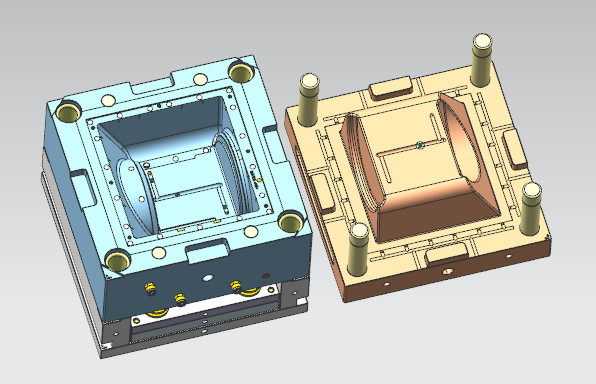
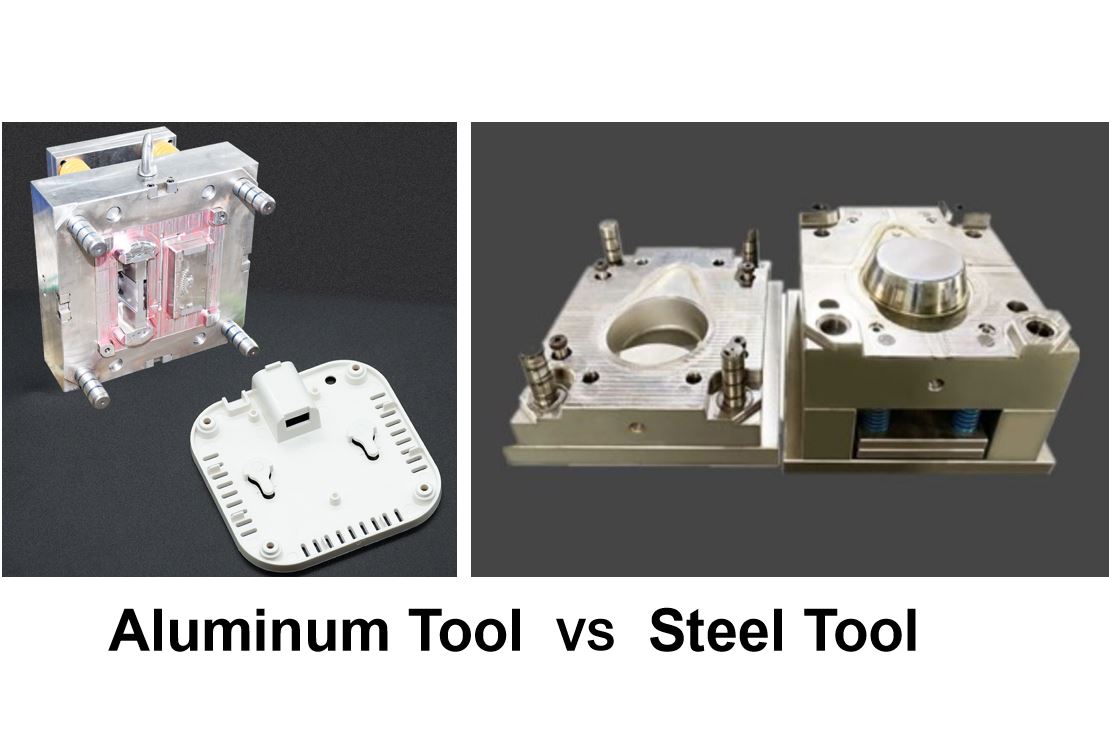
Mold Design and Tooling — The injection mold was designed with a 2-plate configuration, accommodating the panel’s moderate undercut features via side cores. Tooling lead time was 4 weeks for a production-grade steel mold.
-
T1 Sampling and Iteration — First-shot samples (T1) revealed minor sink marks near rib intersections. We adjusted rib thickness-to-wall-thickness ratio from 70% to 50% and added a slight texture to mask residual marks. Second shots (T2) were approved.
-
EMI Coating and Final Validation — Approved panels received EMI conductive coating, followed by shielding effectiveness testing, dimensional inspection, and a full assembly trial. All tests passed on first attempt.
Results: Before and After
|
Metric |
Stainless Steel (Before) |
Polycarbonate (After) |
|
Panel Weight |
1.8 kg |
0.72 kg (−60%) |
|
Per-Unit Cost |
> $35 |
< $8 (−77%) |
|
Assembly Time |
8 min |
2.5 min (−69%) |
|
Rework Rate |
~5% |
< 0.5% |
|
EMI Shielding |
Inherent |
40–60 dB (conductive coating) |
|
Drop Test (1.2 m) |
Dent/deform |
Pass (no cracking) |
When Stainless Steel Is Still the Better Choice
This case study shouldn’t be read as a blanket recommendation for plastic over steel. Stainless steel remains the superior choice when:
-
Operating temperatures exceed 150°C continuously (e.g., industrial ovens, engine compartments)
-
The panel must serve as a structural load-bearing member
-
Extreme chemical exposure (strong acids or alkalis) is expected
-
Production volume is very low (< 100 units) where mold tooling cannot be amortized
-
Regulatory requirements mandate metallic enclosures (certain medical and hazardous-location applications)
Conclusion
The transition from stainless steel to injection-molded polycarbonate in this instrument panel redesign demonstrates that material innovation, when grounded in engineering analysis, can deliver measurable improvements across weight, cost, and assembly efficiency—without compromising on EMI shielding or durability.
The key takeaway: don’t default to stainless steel out of habit. Evaluate your actual performance requirements, volume, and cost targets, and let the data drive your material decision. In many cases, modern engineering plastics paired with appropriate post-processing (like EMI coating) can match or exceed the performance of metal—at a fraction of the cost and weight.
If you’re considering a similar material transition, our engineering team at Eastmaster can help you evaluate feasibility, run DFM analyses, and prototype before you commit to production tooling. For guidance on finding the right manufacturing partner for low-volume projects, see How to Find a Reliable Low-Volume Plastic & CNC Factory in China.
Frequently Asked Questions
Q: Can injection-molded plastic really replace stainless steel in instrument panels?
A: Yes, for the majority of industrial instrument enclosures that serve as protective covers rather than structural members. Polycarbonate and other engineering plastics offer sufficient strength, impact resistance, and thermal stability for typical operating environments (−20°C to +70°C). EMI shielding can be achieved with conductive coatings.
Q: How much does an injection mold for an instrument panel cost?
A: For a panel of this size (approximately 300 × 150 mm), a production-grade steel mold typically costs $4,000–$5,000 depending on complexity (undercuts, side cores, surface finish).
Q: Does EMI coating on plastic work as well as stainless steel shielding?
A: Conductive coatings (nickel, copper, or silver-based) on plastic can achieve 40–60 dB shielding effectiveness, which is comparable to thin-gauge stainless steel for most commercial and industrial applications. For military or aerospace applications requiring >80 dB, a metal enclosure may still be necessary.
Q: What if my product operates in extreme temperatures?
A: For continuous temperatures above 130°C, consider PPS (HDT ~260°C), PEEK (HDT ~315°C), or LCP instead of polycarbonate. Our engineering team can help you select the right material based on your specific thermal requirements.
Have an idea to redeisgn your current product? Contact us to get some advice.

• Email: info@eastmaster.com
• Phone: +86 755 22676100
• WhatsApp / WeChat available on the right side.
Prototype Molds Low Volume Molding Your Startup's Secret Weapon
CNC Parts for Robotic Arms: Precision Components for Automation | Eastmaster