Why Smart Buyers Still Choose China for Precision Parts
Why Smart Buyers Still Choose China for Precision Parts
By Eastmaster Engineering Team | Updated September 22, 2026
If you buy CNC-machined parts or custom injection molds, you have probably heard the story a hundred times: "Move to Vietnam for cheaper labor." "India is the next manufacturing hub." "China's advantage is over."
These headlines make for good reading. But they do not help you when you need 5,000 tight-tolerance aluminum housings delivered in three weeks, or a multi-cavity mold built to ±0.01mm with hot runners and side-actions.
So let us skip the headlines and look at what actually drives sourcing decisions in 2026 — based on what we see every day on our own factory floor in Shenzhen.
Decision Factor #1: Can They Actually Hold Tolerance at Scale?
Many countries can machine a simple bracket. Far fewer can hold ±0.005mm across a 2,000-piece production run — consistently, batch after batch.
This is where China's advantage has quietly widened over the past five years. The country now consumes roughly $24.6 billion in machine tools annually — about 31% of the global market. More importantly, domestic 5-axis CNC localization jumped from 18% to 55% between 2020 and 2024, thanks to companies like Nawei and Julang. The result: more shops can run complex geometries without paying the premium for imported machine brands.
For comparison, most Vietnamese precision shops still top out around ±0.02mm to ±0.05mm unless they are foreign-invested operations running imported equipment. India's precision capacity has grown, but it remains concentrated in a few cities like Pune and Chennai, and the local supplier network around those hubs is still developing.
What this means for buyers: if your part requires tight tolerances in production volumes, China's process capability gap over emerging alternatives is not closing — it is growing.
Decision Factor #2: How Fast Can They Get You from Drawing to Delivery?
Speed in manufacturing does not come from working faster. It comes from having everything you need close by.
In the Pearl River Delta — the Shenzhen-Dongguan-Guangzhou corridor — a machine shop can source specialty alloys, custom cutting tools, heat treatment, surface finishing, and quality inspection all within a 50-kilometer radius. Often within the same industrial park. This is what the industry calls the "two-hour supply chain."
Try to replicate that in Vietnam. Most mold shops there still import tool steel from China or Japan, adding 2-4 weeks to project timelines. In India, you might find an excellent CNC shop in Bangalore, but the anodizing provider is three states away.
For CNC precision machining projects, typical lead times in China run 7-20 days with rush options at 3-5 days. Vietnam's timeline averages 10-30 days. For rapid prototyping programs where iteration speed drives your product development, this gap changes everything.
Decision Factor #3: Can They Handle All Your Materials in One Place?
A typical precision project might require 6061 aluminum for the housing, 316 stainless steel for inserts, PEEK for high-temperature components, PTFE for seals, and copper alloy for contacts. Getting all of these from a single supplier cluster — with consistent quality across each material — is a massive time and risk saver.
In Shenzhen, a single shop might stock 30+ grades of aluminum, stainless steel, titanium, engineering plastics, and copper alloys, all sourced locally. Every material is a short truck ride away.
Compare this to emerging manufacturing hubs, where specialty alloys often require import lead times of several weeks. For multi-material assemblies, China's local sourcing advantage multiplies with each additional material in your BOM.
Decision Factor #4: What About Tooling and Mold Making?
Here is a fact that catches many buyers off guard: complex mold tooling in Vietnam often costs 10-30% more than in China, not less.
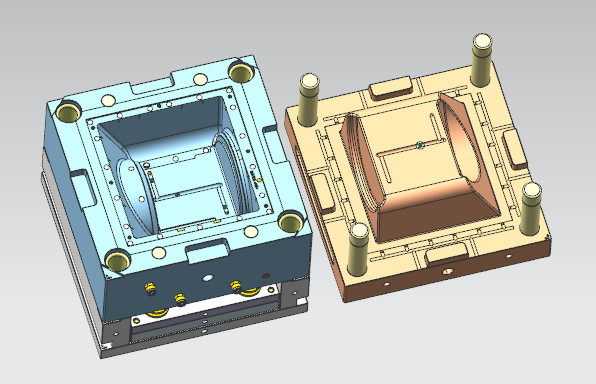
Mold making is not assembly work. It is precision craft that depends on four things: tool steel supply, EDM and wire-cutting infrastructure, skilled toolmakers, and hot runner system availability. China leads in all four.
Tool steel: China has deep domestic production of P20, H13, NAK80, and S136 mold steels. Vietnam imports most of it.
EDM infrastructure: China's EDM service network is dense. Vietnam's is thin.
Skilled toolmakers: China has decades of institutional knowledge in mold design. Vietnam's talent pool is growing but still small.
Hot runner systems: Available same-day from local distributors in Dongguan. Imported with weeks of delay in Hanoi or Ho Chi Minh City.
A 4-cavity, hot-runner mold with side-actions runs $28,000-$38,000 in China versus $32,000-$48,000 in Vietnam. For simpler prototype molds, Vietnam can be 15-25% cheaper. But anything with real complexity tips the cost back to China.
On top of that, certified quality systems matter enormously in regulated industries. China's depth of ISO 13485 and IATF 16949 certified molders far exceeds what is available in Vietnam or Indonesia. If your project needs certified quality systems at scale, your options outside China shrink quickly.
Decision Factor #5: What Is the Real Total Cost?
This is where most cost comparisons fail. They look at the per-part quote and stop there. But the number that actually matters is total landed cost:
Tooling cost
Unit production cost
Shipping and logistics
Tariff exposure
Quality risk (rework, scrap, delays)
Lead time cost (inventory carrying, time-to-market impact)
When you run this calculation honestly, China's precision manufacturing often wins — even with US tariffs at roughly 35% for most manufactured items versus Vietnam's 10%. The reason: faster lead times mean less inventory cost, better quality means less rework, and supply chain density means fewer delays.
Yes, the tariff gap is real. Smart companies run both countries: China for precision and complexity, Vietnam for tariff arbitrage on simpler SKUs. The mold stays Chinese; the assembly label changes.
Where China Does Not Win
Honesty matters. Here are the cases where looking elsewhere makes sense:
Simple, high-volume assembly with loose tolerances — basic consumer goods, textiles, simple plastic housings with no cosmetic requirements. Vietnam and Bangladesh offer genuine cost advantages here, especially for US-bound goods.
Tariff-sensitive exports — if the tariff gap is your primary cost driver and your parts do not need tight tolerances, Southeast Asia deserves a serious look.
Very small, fragmented orders — if you need 50 pieces of three different parts every month, a smaller shop in Vietnam or India may give you more attention. Chinese factories optimized for precision work prefer longer runs.
The Product Categories Where China's Precision Edge Is Strongest
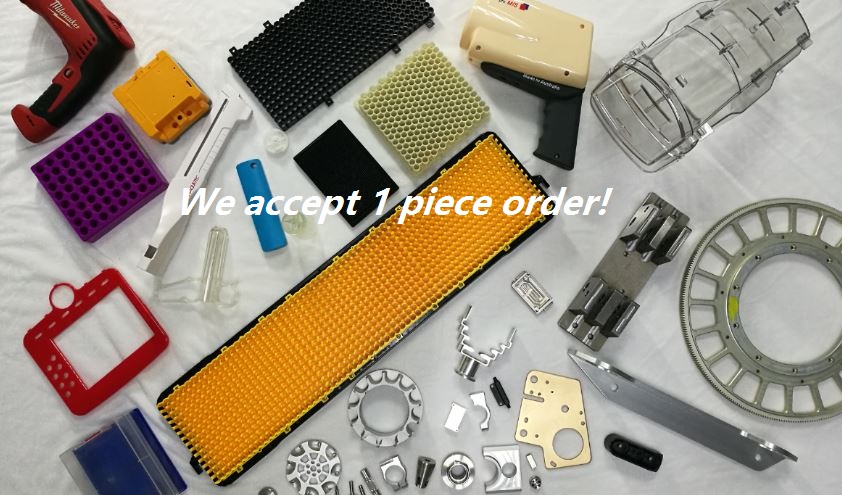
Medical device components — surgical instruments, implant housings, diagnostic equipment. Requires ISO 13485 and traceable materials.
Automotive precision parts — EV powertrain components, sensor housings, steering system parts. China's IATF 16949-certified supplier base keeps growing.
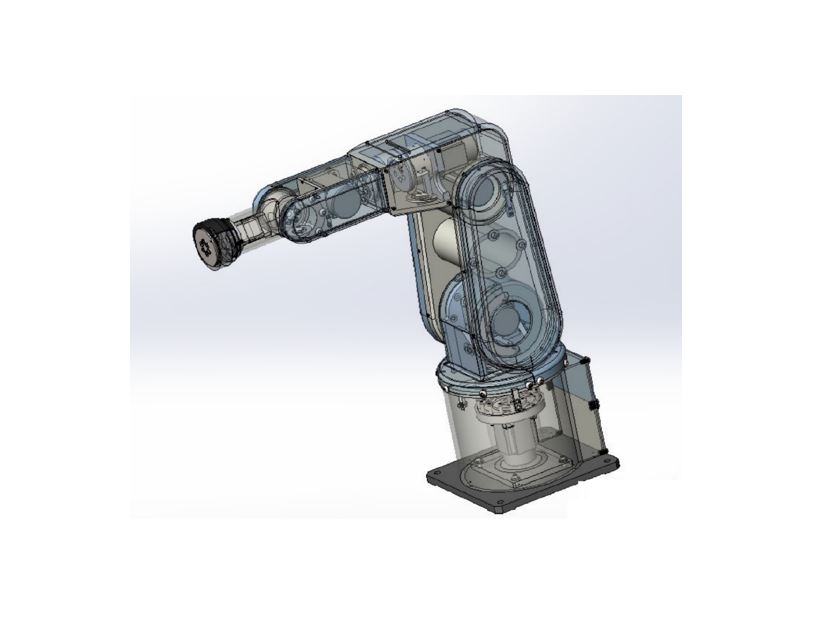
Robotics and automation — precision gears, shafts, housings, end-effector parts. China is the world's largest robotics market, driving continuous capability upgrades.
Optical and semiconductor equipment — aluminum and ceramic components with sub-micron surface finishes.
Complex multi-material assemblies — products combining CNC-machined metals, injection-molded plastics, and surface treatments in one geographic cluster.
The Bottom Line
The right sourcing question in 2026 is not "China or somewhere else?" It is "China for what, and somewhere else for what?"
Keep precision CNC machining and complex injection molding in China. The supply chain density, tolerance capability, material availability, and certification infrastructure are not replicated elsewhere at comparable cost and speed.
Move simple assembly and low-compliance work to lower-cost regions when tariff advantages justify the tradeoff.
And always evaluate your manufacturing partner based on total landed cost — not just the per-part quote. When you run that calculation honestly, China's precision manufacturing advantage holds up.
At Eastmaster, we have spent 25 years building precision manufacturing capability — CNC precision machining with 15 machining centers and 30+ materials, and injection molding with 25 years of mold-making expertise. Our ISO 13485 and ISO 9001 certifications, combined with Shenzhen's unmatched supply chain ecosystem, let us deliver precision parts at speeds and costs that emerging competitors simply cannot match.
If you are evaluating your sourcing strategy or need a second opinion on a tricky part, we are happy to review your requirements. Sometimes the best decision is knowing where to make what — and we will tell you honestly if something would be better made elsewhere.
Email:info@eastmaster.com Phone: +86 755 22676100
How to Find a Reliable Low-Volume Plastic & CNC Factory in China (2026)