Prototype Molds Low Volume Molding Your Startup's Secret Weapon
Prototype Molds Low Volume Molding Your Startup's Secret Weapon
When hardware startups ask us, “How much cheaper is a rapid mold than a production mold?”—we know they’re operating under a common misconception. Many assume “rapid tooling” means both faster and significantly cheaper parts. But that’s not quite right.
The truth? A simplified (or “rapid”) mold often has a lower upfront cost—but the per-part price can be higher than mass production. And that’s perfectly okay—because its real value isn’t in saving pennies. It’s in reducing risk, validating demand, and avoiding catastrophic early mistakes—especially when your team lacks deep manufacturing experience.
This is where small-batch injection molding, paired with hands-on Design for Manufacturability (DFM) support, becomes a startup’s secret weapon.
This has become especially true in today’s competitive landscape, where getting functional, market-ready units into customers’ hands can make or break a launch.
Why Not Just Stick With 3D Printing or CNC?
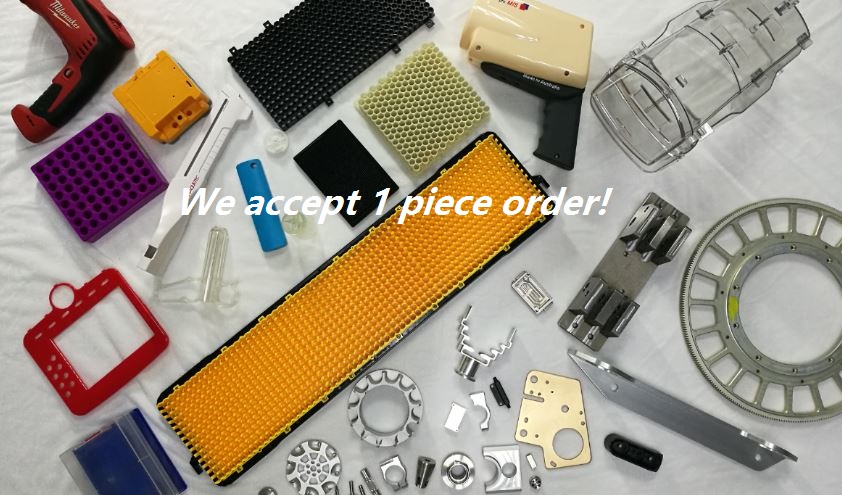
Many startups begin with 3D prints or CNC-machined prototypes—and for internal fit checks, that’s fine. But when it’s time to show real products to backers, investors, or pilot customers, these methods fall short:
3D printing rarely replicates the mechanical behavior, surface finish, or thermal performance of real thermoplastics.
CNC prototypes become too much costing beyond a few units—impractical for even 200 demo pieces.
Silicone molding (urethane casting) offers better aesthetics but uses non-engineering resins that degrade quickly outdoors or under temperature stress. It’s only viable for runs under 100 pieces.
If a customer has approved your design and placed an order for 300–500 units, refusal to accept the order wastes all your R&D investment. But committing to a full production mold—often 20K–100K+—is equally risky if demand doesn’t come true.
CNC prototypes become too much costing beyond a few units—impractical for even 200 demo pieces.
Silicone molding (urethane casting) offers better aesthetics but uses non-engineering resins that degrade quickly outdoors or under temperature stress. It’s only viable for runs under 100 pieces.
If a customer has approved your design and placed an order for 300–500 units, refusal to accept the order wastes all your R&D investment. But committing to a full production mold—often 20K–100K+—is equally risky if demand doesn’t come true.
That’s where low volume injection molding for startups shines: it bridges the gap between “just a prototype” and “full-scale production.”
What does Prototype low volume Injection Molding really mean?
In China’s manufacturing ecosystem, what’s often called a “rapid mold” is more accurately a simplified mold. Designed for low-volume trials (typically 100–1000 parts), it intentionally reduces complexity to lower upfront cost and shorten lead time:
|
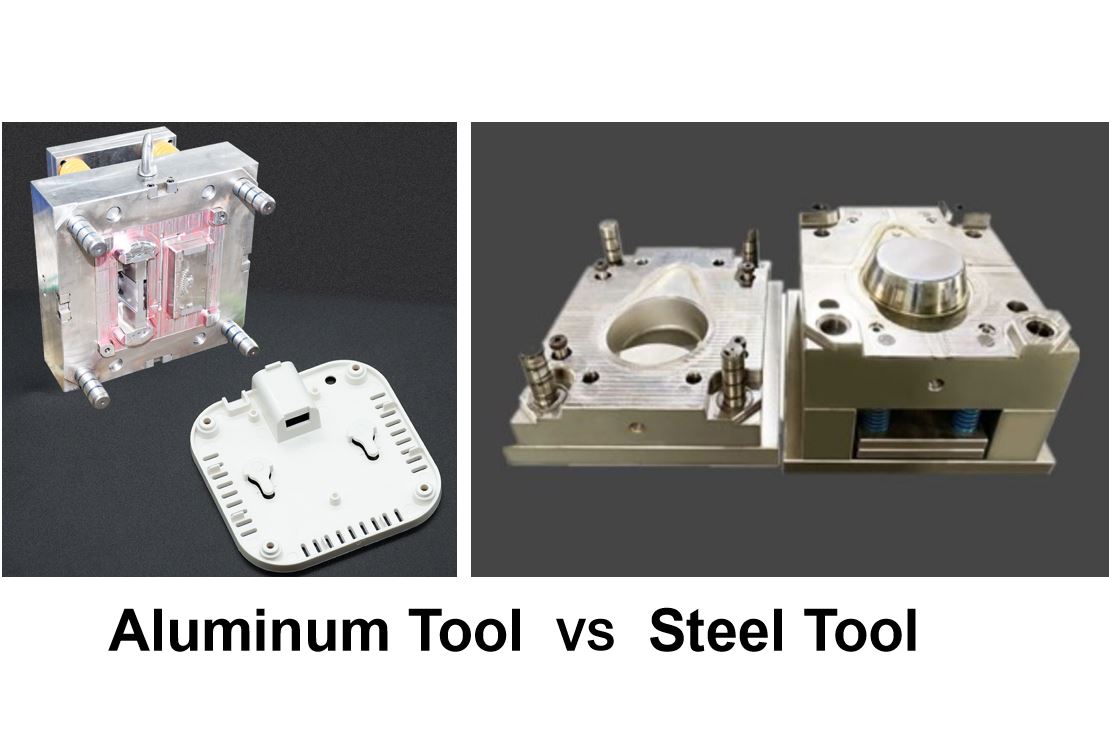
--- Mold cores made from aluminum or pre-hardened steel instead of high-grade tool steel
--- Elimination of side-actions, lifters, or conformal cooling where possible
--- Minimal polishing unless appearance is critical --- Strategic part splitting to avoid undercuts (with manual assembly post-molding) --- The sliders are usually manually inserted by operators, and the threads are not automatically stripped but rather manually unscrewed. |
 |
As a startup-friendly mold maker, we tailor every prototype mold based on your actual needs. Need 100 internal brackets with no cosmetic requirements? We’ll use softer materials and skip unnecessary finishes. Need 400 glossy, transparent enclosures? We’ll specify harder steel capable of high-polish—even if it costs slightly more—because first impressions matter.
Weigh the pros and cons: Lower Mold Cost ≠ Lower Part Cost
Here’s what surprises many founders: parts from prototype injection molding often cost more per unit than mass-produced equivalents. Why?
Slower cycles: Without proper cooling channels, parts may take 2+ minutes to cool vs. 30 seconds.
Manual labor: Slides or inserts may require hand-loading by the operator.
Secondary operations: Side holes might need post-molding CNC drilling.
Assembly: Deep cavities are sometimes split into multiple molded segments, requiring bonding.
But crucially—as a whole this is still far more efficient and cost-effective than 3D printing or silicone molding at scale. And unlike those methods, you get real
engineering-grade plastic in final geometry, ready for user testing, demos, or early sales.
The key mindset shift? Don’t judge prototype injection molding by per-part cost alone. Judge it by how much risk it removes from your launch.
Where a Startup-Friendly Mold Maker Adds Real Value: DFM Collaboration
Most startup engineers haven’t spent years inside a molding facility. Their CAD models may look perfect—but contain hidden manufacturability traps:
--- Zero draft on vertical walls
--- Uneven wall thickness causing sink marks
--- Sharp internal corners creating stress fractures
--- Snap-fits without proper strain relief
Without guidance, these lead to failed shots, cosmetic rejects, or costly mold reworks.
--- Uneven wall thickness causing sink marks
--- Sharp internal corners creating stress fractures
--- Snap-fits without proper strain relief
Without guidance, these lead to failed shots, cosmetic rejects, or costly mold reworks.
That’s why, as a startup-friendly mold maker, we include free, practical Design for Manufacturability (DFM) feedback with every quote. We don’t just say “this won’t work.”
We explain why—and offer simple fixes:
We explain why—and offer simple fixes:
“Add 1° of draft here, and we can eject cleanly without a side-action—saving $2,500 and 5 days.”
We also help you strategically simplify:
Replace complex undercuts with snap-fit assemblies
Allow visible R-corners at rib intersections (avoiding EDM costs)
Design for manual inserts instead of automated mechanisms
This isn’t compromising quality—it’s smart engineering for your stage.
Allow visible R-corners at rib intersections (avoiding EDM costs)
Design for manual inserts instead of automated mechanisms
This isn’t compromising quality—it’s smart engineering for your stage.
Who Is Prototype Mold & Injection Molding For? (And Who Should Wait?)
Prototype injection molding makes the most sense if you:
✅ Are validating demand with 100–500 units
✅ Have limited capital and can’t risk a full production mold
✅ Serve niche markets with inherently low volumes
✅ Need real-material validation before crowdfunding or investor demos
✅ Have limited capital and can’t risk a full production mold
✅ Serve niche markets with inherently low volumes
✅ Need real-material validation before crowdfunding or investor demos
It’s not ideal if:
❌ You’re certain of high-volume demand and have funding to match
❌ Your product requires optical clarity, tight tolerances, or complex textures that demand full tooling
❌ You have sufficient time and budget for iterative prototyping
❌ You’re certain of high-volume demand and have funding to match
❌ Your product requires optical clarity, tight tolerances, or complex textures that demand full tooling
❌ You have sufficient time and budget for iterative prototyping
Remember: the goal isn’t perfection—it’s About Smart Risk Management.
Final Thought: Integrity Over Shortcuts
Some vendors deliver 3D-printed parts as “prototypes” or use silicone copies to imitate injection-molded quality. But when those parts fail in the field, it’s your brand—not theirs—that suffers.
We believe sustainable success comes from honesty, quality, and partnership. If your first 100 units prove your concept, great—we’ll help you scale. If they reveal flaws, even better—you’ve saved yourself from a six-figure mistake.
Injection molding for startups isn’t a compromise. With the right startup-friendly mold maker, it’s a strategic step toward building something real—without risking it all.
Ready to move beyond 3D prints and validate your product with real prototype injection molding?
Eastmaster specializes in simplified tooling for early-stage teams, with free DFM reviews and no project too small.
Contact Us — even if you only need 100 pieces of plastic parts.

• Email:info@eastmaster.com
• Phone: +86 755 22676100
• WhatsApp / WeChat available on the right side.
• Phone: +86 755 22676100
• WhatsApp / WeChat available on the right side.
How to Find a Reliable Low-Volume Plastic & CNC Factory in China (2026)
From Stainless Steel to Plastic: How We Redesigned an Instrument Panel and Cut Weight by 60%
Related blog