How to Find a Reliable Low-Volume Plastic & CNC Factory in China (2026)
How to Find a Reliable Low-Volume Plastic & CNC Factory in China: A 2026 Practical Guide
I spent 2009 working as a procurement officer for a European industrial buying house, traveling through factory after factory across Guangdong and Zhejiang. My job was to vet suppliers for overseas clients — which meant I saw the gap between what a factory claims on its website and what actually happens on the production floor. In 2012, I joined Eastmaster as a project engineer, and I’ve been on the other side ever since: running CNC programs, reviewing mold designs, arguing with toolmakers about draft angles, and shipping parts to clients who needed 50 pieces, not 50,000.
That double perspective — buyer first, then maker — is what I want to share here. Because finding the right low-volume manufacturing partner in China isn’t about searching the biggest factory directory. It’s about knowing which questions to ask, which red flags to spot, and what a genuinely capable small-batch factory actually looks like from the inside.
1. Why Most Chinese Factories Reject Low-Volume Orders
Let’s start with the economics. A typical injection molding factory in Dongguan runs 20–50 machines. Each machine hour costs approximately $8–$15 in overhead. Switching between jobs (changing molds, adjusting parameters, loading new material) can consume 2–4 hours of non-productive time. When a factory is running a 50,000-piece order for a consumer electronics brand, that setup cost is amortized to pennies per part. For a 100-piece order? The setup cost alone might exceed the part price.
This is why many factories set MOQs at 1,000–5,000+ units. It’s not that they can’t make fewer — it’s that their business model isn’t built for it.
However, a growing segment of Chinese manufacturers has deliberately structured themselves around small-batch production. These are your targets. Here’s what sets them apart:
|
Factor
|
High Volume Only Factory
|
Low Volume Capable Factory
|
|---|---|---|
|
Typical MOQ
|
1,000–5,000+ pcs
|
1–500 pcs
|
|
Mold type offered
|
Steel production molds only
|
|
|
Setup flexibility
|
Fixed schedule, batch changes costly
|
Frequent changeovers built into scheduling
|
|
Engineering support
|
Minimal (drawings → parts)
|
DFM review, design feedback before tooling
|
|
Pricing structure
|
Volume-discount only
|
Transparent per-piece + tooling breakdown
|
When screening potential partners, ask directly: “What is your typical order size? Do you accept orders under 100 pieces for injection-molded plastic parts or CNC-machined components?” Their answer tells you immediately which column they belong in.
2. Where China’s Low-Volume Manufacturing Hubs Are Located
Not all regions are equal. Based on my years of traveling to supplier sites across China, low-volume manufacturing capability is concentrated in three coastal clusters:
|
Region
|
Core Cities
|
Strength
|
Typical Lead Time
|
Best For
|
|---|---|---|---|---|
|
Pearl River Delta
|
Shenzhen, Dongguan, Foshan
|
CNC machining, rapid prototyping, electronics enclosures
|
3–7 days (CNC), 10–15 days (molding)
|
|
|
Yangtze River Delta
|
Ningbo, Taizhou, Suzhou
|
Injection molding, aluminum tooling, automotive parts
|
5–10 days (CNC), 12–18 days (molding)
|
Automotive, home appliances, industrial fittings
|
|
Bohai Rim
|
Qingdao, Tianjin
|
Heavy industry, large-format CNC, die casting
|
7–14 days
|
Aerospace, heavy equipment, marine components
|
If you need rapid prototype CNC parts for consumer electronics or medical devices, Guangdong (especially Shenzhen/Dongguan) offers the densest network of small-batch CNC shops with 3–5 axis capabilities. For large sized plastic parts injection molding with aluminum tooling, Zhejiang has the most competitive pricing and fastest mold-making turnaround.
3. The Real Cost of Low-Volume Manufacturing in China
One of the biggest misconceptions is that “small batch = expensive.” While per-unit cost is indeed higher than mass production, the total project cost is often dramatically lower because you’re not investing in production-grade tooling before validating your design. Here are realistic 2026 pricing benchmarks:
|
Manufacturing Method
|
Qty
|
Typical Unit Cost (USD)
|
Tooling Cost
|
Lead Time
|
Best Application
|
|---|---|---|---|---|---|
|
1–20 pcs
|
$15–$80/part
|
None
|
3–7 days
|
Functional prototypes, jigs, metal parts
|
|
|
50–200 pcs
|
$8–$35/part
|
None
|
5–10 days
|
Short-run production, bridge tooling
|
|
|
50–500 pcs
|
$1.50–$8/part
|
$1,500–$4,000
|
10–15 days
|
Pilot runs, functional plastic parts
|
|
|
1,000+ pcs
|
$0.30–$3/part
|
$5,000–$25,000
|
4–8 weeks
|
Mass production
|
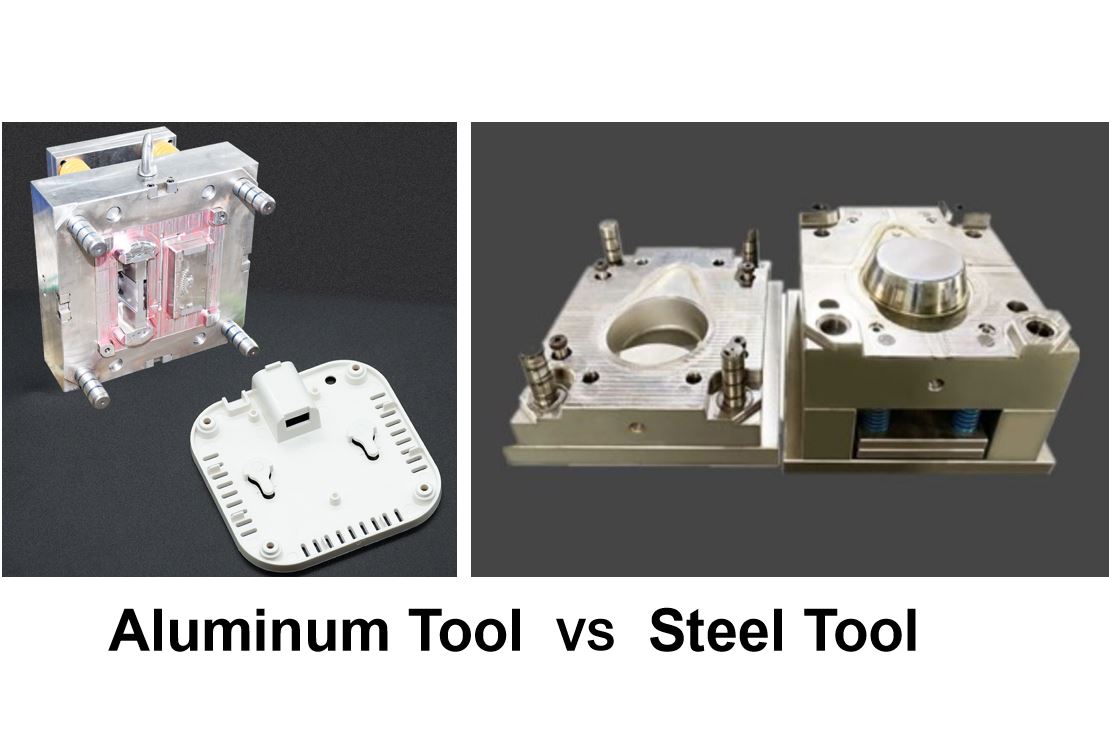
Key insight: For quantities between 50–500 pieces, rapid injection molding with aluminum tooling often delivers the best cost-per-part ratio while using production-grade materials (ABS, PC, PA66, POM) — something 3D printing cannot achieve. The aluminum mold can typically produce 500–2,000 shots before significant wear, which is more than enough for pilot runs and early-stage production.
4. Verifying a Factory’s Real Capabilities

This is where most sourcing guides fall short. They tell you to “check ISO certification” but don’t explain how to verify what actually matters for small-batch production. Here’s the practical verification framework I use — the same one I wish I’d had when I was on the buying side.
Step 1: Confirm They’re a Factory, Not a Trading Company
Trading companies add 15–30% markup and cannot control production schedules or quality. When I was procuring for a European client, I learned to spot the difference fast:
Red flags (likely a trading company):
-
Can’t provide machine photos with their company name visible
-
Quote suspiciously fast (within 1 hour for complex parts)
-
Avoid video calls showing the production floor
-
Give generic answers to technical questions
What to ask for: A live video walkthrough of the CNC workshop or injection molding floor. A real factory can walk you to a machine in 30 seconds. A trading company will have a reason they can’t.
I remember walking a client through our CNC floor on a WeChat video call last year — he wanted to see the surface finish on a batch of anodized aluminum housings we were running. Two minutes later he was watching the operator load his actual parts. That kind of transparency only comes from being the factory.
Step 2: Test Technical Fluency
Send a STEP file with specific GD&T callouts and ask for a quote. A capable factory will respond with clarifying questions about tolerances, surface finish requirements, and material grade. A trading company will respond with a generic price and “we can do it.” Specific things to test:
-
Ask about achievable tolerances for a specific material (e.g., “What tolerance can you hold on POM?” — correct answer: ±0.02–0.05mm for CNC)
-
Request their recommended surface finish for outdoor applications (they should ask about UV exposure and chemical contact)
-
Ask which post-processing options they offer in-house vs. outsource
Step 3: Evaluate Quality Systems
For low-volume orders, quality management is actually more critical than for mass production because there’s no statistical sample to catch outliers. Every part matters. Look for:
-
First-article inspection (FAI) process with dimensional reports
-
In-process QC checks at defined intervals
-
CMM (Coordinate Measuring Machine) or vision measurement system for critical dimensions
-
Material traceability with certificates of conformance
-
Clear corrective action process for out-of-spec parts
5. Cross-Language Engineering Communication
Language barriers in manufacturing aren’t about casual conversation — they’re about technical precision. A misunderstanding of ±0.05mm vs. ±0.005mm tolerance can be the difference between a functional assembly and a pile of scrap. I’ve seen projects lose $5,000–$15,000 because a factory interpreted “mirror finish” as SPI B-2 (semi-gloss) when the client meant SPI A-1 (optical quality).
When I first started managing projects at Eastmaster, one of my earliest jobs was translating a German client’s drawing notes — not just the language, but the DIN standard callouts — into terms our toolmakers could execute precisely. That experience taught me that the real value of bilingual engineering support isn’t about speaking English; it’s about speaking both engineering languages fluently.
The ideal partner offers bilingual engineering support — not just salespeople who speak English, but engineers or project managers who can discuss:
-
Technical drawings with GD&T callouts (ASME Y14.5)
-
Material selection tradeoffs (e.g., ABS vs. PC vs. POM for your specific application)
-
Surface finish standards (SPI, Ra values, MIL-SPEC finishes)
-
Post-processing options (anodizing, powder coating, silk screening, EMI shielding)
Communication test: Send a 2D drawing with specific callouts and ask the factory to quote based on your STEP file. If they respond with clarifying questions about critical dimensions, functional requirements, or suggest design improvements — that’s a green flag. Generic “we can do it” responses are a red flag.
6. Design-for-Manufacturing (DFM) Collaboration
A great manufacturer doesn’t just follow your drawings — they help you improve them. Every week, our engineering team reviews incoming designs and provides DFM feedback before production begins. Here are the most common issues we catch and the cost impact of fixing them before vs. after tooling:
|
Common DFM Issue
|
Cost to Fix Before Tooling
|
Cost to Fix After Tooling
|
|---|---|---|
|
Insufficient draft angle (< 0.5°)
|
$0 (design revision)
|
$500–$2,000 (mold re-cut)
|
|
Uneven wall thickness (> 20% variance)
|
$0 (design revision)
|
$300–$1,500 (sink marks, warp)
|
|
Sharp internal corners (no fillets)
|
$0 (add R0.5mm fillets)
|
$200–$800 (stress cracking)
|
|
Undercuts without side-action plan
|
$0 (redesign or add lifter)
|
$1,000–$5,000 (add side core)
|
|
Gate location causing weld line on cosmetic face
|
$0 (relocate gate in CAD)
|
$500–$3,000 (re-cut mold + re-sample)
|
Just last month, a client sent us a housing design with 0.3° draft on a deep rib — we flagged it before cutting steel, revised the draft to 1.0°, and saved them what would have been a $1,800 mold modification. That kind of catch only happens when the people reviewing your design are the same people who’ll be running the machine.
A factory that proactively offers DFM feedback is treating you as a long-term partner, not a one-time transaction. This collaborative approach is especially valuable for early-stage products where design iterations are frequent. For a deeper dive, see our guide on Design for Manufacturability (DFM).
7. Intellectual Property Protection
IP protection is the concern I hear about most from first-time buyers. Having been on the purchasing side myself, I understand the anxiety. While China’s IP enforcement environment has improved significantly since the 2020 Patent Law amendments, due diligence remains essential:
-
Always sign an NDA Agreement (Non-Disclosure Agreement) before sharing sensitive designs.
-
Choose factories that specialize in custom work — they’re less likely to copy your product than those focused on generic commodity items.
-
Register your design patent in China before production. China follows a “first-to-file” system, meaning whoever files first owns the right — even if you invented it.
-
Use segmented manufacturing: have different factories produce different components, with final assembly at a separate location.
In our own practice, we sign NNN agreements with every new client before reviewing their CAD files. We also restrict design file access to the project engineer and the specific operator running the job — not the whole shop floor. These aren’t complicated measures, but they require a factory culture that takes confidentiality seriously.
8. Scalability: Starting Small, Growing Together
One of the most overlooked factors in factory selection is scalability. Your product might start at 50 units for beta testing, but what happens when you need 5,000 units per month? Migrating production to a new factory is expensive and risky — you lose process knowledge, qualification data, and the working relationship you’ve built.
When evaluating a low-volume partner, ask:
-
Can you handle 10x volume without changing your pricing structure?
-
Do you have capacity for both aluminum rapid tooling and steel production molds?
-
What is the transition timeline from rapid tooling to production tooling?
-
Can you maintain dimensional consistency when scaling from 100 to 10,000+ units?
A good low-volume partner has a clear scalability roadmap. I’ve worked with clients who started with 10 CNC-machined prototypes, moved to 200 rapid-molded parts for beta testing, and are now running 8,000+ per month in production molds — all without switching facilities. That continuity matters because every time you move production, you’re essentially starting over on the learning curve.
Frequently Asked Questions
Q1: What is the minimum order quantity (MOQ) for plastic injection molding in China?
With rapid tooling (aluminum molds), MOQs can be as low as 50–100 pieces. Some factories accept orders starting from a single piece for CNC machining. For steel production molds, MOQs typically start at 1,000–5,000 pieces.
Q2: How long does it take to get low-volume CNC parts from China?
Typical lead times: CNC machined prototypes 3–7 business days; rapid injection molding (including tooling) 10–15 business days; production injection molding 4–8 weeks. Shipping adds 3–7 days by air, 25–35 days by sea.
Q3: Is small-batch manufacturing from China more expensive than local options?
Generally no. Even with shipping, CNC-machined parts from China typically cost 40–60% less than equivalent US/EU quotes. For injection molding with rapid tooling, the savings can be 50–70% on tooling costs alone. The key is finding a factory optimized for small batches rather than one that treats low-volume orders as an inconvenience.
Q4: How do I verify material authenticity when sourcing from China?
Request material certificates of conformance (CoC) for every batch. For critical applications, specify third-party testing (SGS, Intertek) on the PO. Reputable factories maintain relationships with certified material distributors like SABIC, DuPont, and Covestro, and can provide lot traceability from resin to finished part.
Q5: What payment methods do Chinese low-volume factories accept?
Common terms: 30–50% deposit + balance before shipment for new customers; net 30 terms for established relationships. Payment methods include wire transfer (T/T), PayPal (for small orders), and letters of credit (L/C) for larger orders. Avoid factories that demand 100% upfront payment — this is a red flag.
Final Thoughts
Finding the right low-volume manufacturing partner in China comes down to identifying the team that treats your 50-piece order with the same engineering rigor as a 50,000-piece production run. The markers are consistent: they ask technical questions, they offer DFM feedback before you ask, they have documented QC processes, they can walk you onto the shop floor in real time, and they can show you a path from prototype to production.
If you’re evaluating suppliers for your next project, reach out to us at Eastmaster — we accept orders from a single CNC-machined piece, and our engineering team responds within 24 hours with technical feedback, not just a price.
About the Author
Eric Peng is a Senior Project Manager at Eastmaster with over 15 years of manufacturing experience. He began his career in 2009 as a procurement officer for an international buying house, responsible for supplier vetting and quality audits across China’s manufacturing regions. Since 2012, he has been managing CNC machining and injection molding projects at Eastmaster, overseeing everything from DFM review through production and shipment for clients in North America and Europe.

Email: info@eastmaster.com
Phone: +86 755 22676100
Prototype Molds Low Volume Molding Your Startup's Secret Weapon