Which approach is best suitable for 100 pcs of low volume plastic parts manufacturing?

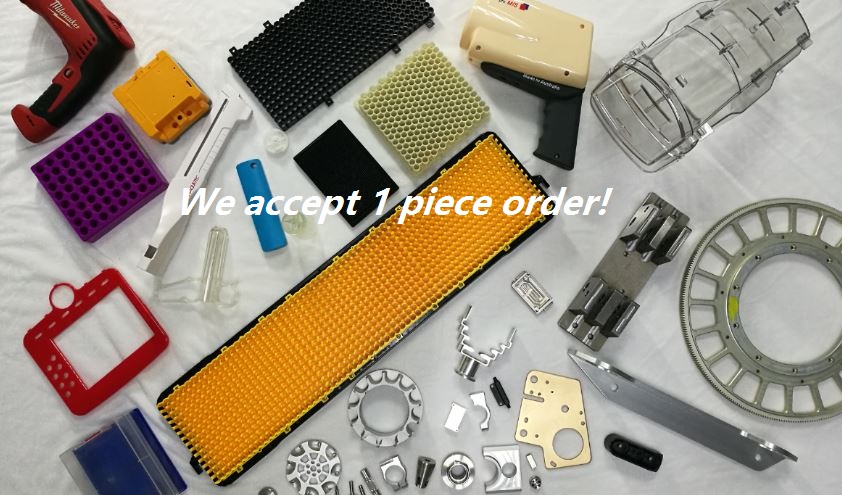
The common methods to make plastic parts are: 3D printing, CNC machining, vacuum casting, injection moulding, rotational moulding, blow moulding, etc.
They are applicable for different quality requirements and quantity demand.
Now, let's explore the advantages and disadvantages of each approach.
Below is a table summarizing the pros and cons of these different methods.

Today we mainly explore the options for quantity 100+ pcs/sets.
As you can see from the table, for this quantity requirement, we can consider 3D printing, vacuum casting, and molding.
However, 3D printing produces rough surface parts and requires additional labor for surface polishing and color application. It is more suitable for very small-sized parts or complicated designs. Therefore, we will mainly discuss vacuum casting and injection molding approaches in low-volume production.
Advantages of Vacuum Casting Approach:
- Cost-Effectiveness for Small Batches:
Vacuum casting is particularly advantageous in low-volume production where quantities are not substantial enough to justify initial tooling and molding costs. The cost per unit in prototyping tends to be much lower compared to the tooling and molding approach, making it more economical and flexible.
- Rapid Iteration and Design Changes:
The iterative nature of vacuum casting is a crucial advantage, especially in the early stages of product development. It enables rapid iteration and frequent design changes, facilitating a dynamic development process.
3.Reduced Lead Time:
Vacuum casting excels in reducing lead times due to its less complex production process compared to injection tooling and molding.
4.Testing and Validation:
Vacuum casting provides a platform for thorough testing and validation before committing to mass production. This proactive approach helps identify and address potential design issues early in the process, reducing the likelihood of costly errors during large-scale manufacturing.
5.Customization and Flexibility:
Well-suited for low-volume production involving niche markets or specific customer requirements, vacuum casting allows for customization without the constraints associated with injection tooling and molding adjustments.
6.Market Testing:
Vacuum casting offers an opportunity for market testing before committing to full-scale production. This market-oriented approach helps manufacturers gauge customer response, assess market demand, and make informed decisions based on actual market feedback.
Disdvantages of Vacuum casting Approach:
- Material choice
The material available for vacuum casting is more limited and also none of them are real plastic. Furthermore, what we usually use are simulant PC, simulant ABS, simulant PP etc which is polyurethane resin fundamentally. And the vacuum casting material cannot stand under temperature above 70 degree Centigrade.
- Colour matching
The colour we can obtain from vacuum casting can only be close specified color, and sometime not so evenly mixed.
- Accuracy
Due to the shrinkage of material, the final dimension we can get from vacuum casting
usually have variation to the drawing callouts. The bigger size the part is, the greater
dimensional/shape error it is likely to have.
- Part consistency
The vacuum casting uses silicone mould. This mould life is typically 10 runs. The casted parts have dimensional variation from the 1st piece and 10th piece.
- Costs
Although the unit price from vacuum casting part is lower than CNC machining or 3D printing, it is still higher than injection moulding. When quantity increases, the total cost will become significant.
Advantages of Tooling/Molding Approach:
1. Lower Per-Unit Production Cost for Large Quantities:
While tooling and molding involve higher upfront costs, they become more economically viable as production volumes increase. In low-volume production, the cost per unit may be higher initially, but for larger quantities, the per-unit cost decreases significantly. This makes tooling and molding a more cost-effective option in the long run, especially when demand is expected to grow.
2. Consistency and Precision:
Tooling and injection molding processes are known for their precision and consistency in product manufacturing. The molds ensure uniformity in product dimensions and quality, meeting stringent quality standards. This level of precision is crucial in industries where product specifications need to be maintained consistently, such as aerospace or medical device manufacturing.
3. Scalability:
One of the key advantages of the tooling/molding approach is scalability. Once the molds are created, the production process can be easily scaled up to accommodate higher volumes. This scalability is particularly beneficial when there is a foreseeable increase in demand for the product. It allows manufacturers to efficiently ramp up production without significant changes to the manufacturing process.
4. Real Plastic Materials:
Compared with vacuum casting process where only polyurethane resin are used, injection moulding process can deploy wide range of plastic resin families, including specialized polymers and composites, provides manufacturers with flexibility in choosing materials that align with the product's functional and aesthetic requirements.
5. Long-Term Production Stability:
Injection tooling and molding are ideal for projects with stable and well-defined designs. If the product design is unlikely to undergo significant changes over time, the investment in tooling becomes justified for long-term production stability.
This stability ensures that the manufacturing process remains consistent, leading to predictable and reliable product output.
6. Economies of Scale:
The tooling/molding approach leverages economies of scale, leading to reduced production costs as the quantity increases. Large production runs apportion the initial tooling investment over a greater number of units, contributing to a more favorable cost structure. This cost efficiency is a significant advantage when catering to markets with a high demand for the product.
Disdvantages of Tooling/Molding Approach
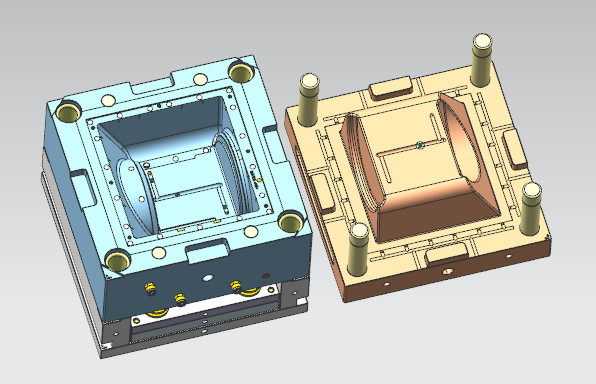
1. Cost -- the tooling cost of injection moulding is expensive. Imperfect design will probably cause loss to modify the tool or have to make a new tool.
2. Lead time -- Usually the lead time of a tool is more than 15 days or even longer.
Conclusion:
In conclusion, the choice between vacuum casting and tooling/molding in low-volume production is a nuanced decision that depends on various factors such as budget constraints, production volume, design stability, and market dynamics.
Vacuum casting is favored for its cost-effectiveness in small batches, rapid iteration capabilities, and suitability for customization. On the other hand, injection tooling and molding offer advantages in terms of per-unit cost reduction for larger quantities, precision, scalability, and long-term production stability.
Manufacturers must carefully evaluate their specific project requirements, considering factors such as the level of design finalization, budget constraints, time-to-market considerations, and the expected demand for the product. Often, a strategic combination of both vacuum casting and tooling/molding approaches may be employed at different stages of the product development lifecycle to optimize cost, quality, and time-to-market. Ultimately, the key is to align the chosen production method with the unique needs and goals of the specific low-volume production project.
Take a job of a handheld product enclosure for example:

---If the parts you need is mainly for demonstration or structural test, and quantity is less than 10 pcs, you could use 3D printing or CNC machining method. It can give you fast delivery at reasonable cost. If quantity is around 20-100 pcs, you could use vacuumn casting method. If the quantity is more than 100 pcs, you could consider prototype tool of injection moulding. It will give you commercial grade parts at equivalent cost.
---In addition to vacuum casting and injection tooling/moulding, if you need prototype parts which is of real plastic material, for quantity less than 100 pcs, you could investigate the availability of material of 3D printing or CNC machining. If unluckily they are unavailable, I am afaid you should consider tooling.
---If you would like to find out a best economical solution for your projects, you are welcome to discuss with us.
Also we are willing to hear your story if you have your experience to share with us.

Email:info@eastmaster.com
Phone: +86 755 22676100
WhatsApp / WeChat available on the right side.
Prototype Injection Tooling in China: Is Aluminum or Steel the Better Choice?
Low volume plastic parts and CNC machined parts production