Will 3D printing replace all the CNC machining and Molding?
Will 3D Printing Replace CNC Precision Machining and Plastic Part Molding?
The rise of 3D printing has revolutionized manufacturing, offering unprecedented flexibility, speed, and cost-efficiency for prototyping and low-volume production. However, the question remains: will 3D printing replace traditional methods like CNC precision machining and plastic part molding? While 3D printing has its advantages, it is unlikely to fully replace these established techniques due to their unique strengths and applications.
3D Printing: Strengths and Limitations
3D printing, or additive manufacturing, builds parts layer by layer, making it ideal for complex geometries and rapid prototyping. It eliminates the need for tooling, reduces material waste, and allows for quick design iterations. For small-scale production or custom parts, 3D printing is often the go-to solution. However, it has limitations in terms of material properties, surface finish, and production speed. While advancements are being made, 3D-printed parts often lack the strength, durability, and precision required for high-performance applications.
CNC Precision Machining: Unmatched Accuracy
CNC precision machining remains a cornerstone of manufacturing for its ability to produce high-tolerance, high-strength parts. Unlike 3D printing, CNC machining removes material from a solid block, resulting in superior surface finishes and structural integrity. This makes it indispensable for industries like aerospace, automotive, and medical devices, where precision and reliability are critical. CNC machines can work with a wide range of materials, including metals, plastics, and composites, offering versatility that 3D printing cannot yet match. While CNC machining is more time-consuming and costly for prototyping, it excels in high-volume production and applications requiring tight tolerances.
Plastic Part Molding: Efficiency at Scale
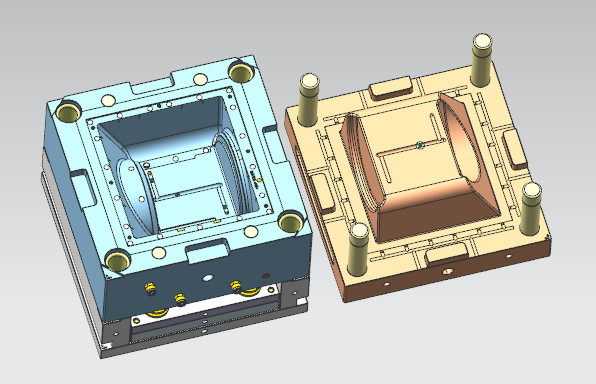
Plastic part molding, including injection molding, is the gold standard for mass production of plastic components. Once the mold is created, it can produce thousands—or even millions—of identical parts with minimal variation. This method is highly efficient, cost-effective, and delivers excellent material properties and surface finishes. While 3D printing is gaining ground in low-volume production, it cannot compete with the speed and cost-efficiency of molding for large-scale manufacturing. Additionally, molding supports a broader range of thermoplastics and elastomers, making it suitable for diverse applications.
Complementary, Not Competitive
Rather than replacing CNC precision machining and plastic part molding, 3D printing is more likely to complement these methods. For example, 3D printing can be used to create prototypes or custom tooling for molding, while CNC machining and molding handle high-volume production and precision parts. Each technology has its niche, and manufacturers often use them in tandem to leverage their respective strengths.
Conclusion
While 3D printing is a game-changer for prototyping and low-volume production, it is unlikely to replace CNC precision machining and plastic part molding entirely. CNC machining offers unmatched precision and material versatility, while molding remains the most efficient method for mass production. 3D printing will replace some CNC machining jobs, but will not replace all the machining jobs. For molding technology, 3D printing cannot compete. The future lies in integrating these methods to create a more flexible and efficient manufacturing ecosystem.
Low volume plastic parts and CNC machined parts production