PEEK CNC Machining: Complete Guide to Grades, Properties and Applications
PEEK CNC Machining: Complete Guide to Grades, Properties and Applications 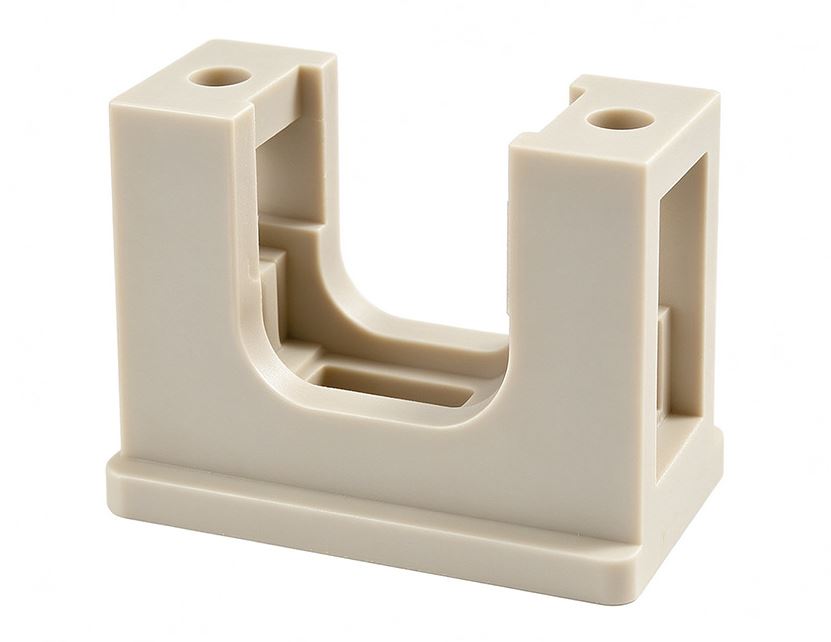
PEEK (Polyether Ether Ketone) is one of the highest-performing thermoplastic engineering polymers available. With a continuous service temperature of 250°C, exceptional chemical resistance, and mechanical properties that rival many metals, PEEK has become the material of choice for demanding applications in aerospace, medical devices, oil and gas, semiconductor, and automotive industries.
However, PEEK cannot be injection molded — its extremely high melt temperature (approximately 370°C) and melt viscosity make conventional injection molding impractical. The primary method for shaping PEEK into precision components is CNC machining. This makes PEEK CNC machining a specialized capability that only experienced manufacturers can deliver consistently.
At Eastmaster Manufacturing in Shenzhen, we have over 25 years of experience in precision CNC machining of high-performance engineering plastics, including PEEK, PTFE, POM, and other advanced polymers. This comprehensive guide covers everything you need to know about PEEK CNC machining — from material grades and properties to machining parameters, design considerations, and quality control.
What Is PEEK and Why CNC Machine It?
PEEK is a semi-crystalline thermoplastic polymer in the PAEK (Polyaryletherketone) family. Its molecular structure — alternating ether and ketone links with aromatic rings — gives it extraordinary thermal stability, chemical inertness, and mechanical strength.
Key properties of PEEK:
-
Continuous service temperature: 250°C (482°F)
-
Short-term peak temperature: 300°C (572°F)
-
Tensile strength: 90-100 MPa
-
Flexural modulus: 3.5-4.0 GPa
-
Density: 1.30-1.32 g/cm³
-
Water absorption: <0.5% at 24 hours immersion
-
Flame rating: UL 94 V-0 (without additives)
-
Biocompatibility: ISO 10993 and USP Class VI compliant (medical grades)
Unlike metals, PEEK can be machined to tight tolerances without the risk of galvanic corrosion, and it weighs approximately 70% less than stainless steel. These properties make PEEK CNC machining an attractive alternative to metal parts in weight-sensitive and corrosion-critical applications.
Because PEEK cannot be injection molded due to its extremely high melt viscosity and processing temperature requirements, CNC machining is the most practical and widely used method for producing PEEK components — from rapid prototypes to full production volumes.
PEEK Grades for CNC Machining
Not all PEEK is the same. Different grades are formulated for different applications, and the choice of grade significantly affects machinability, cost, and final part performance.
Unfilled (Virgin) PEEK
Unfilled PEEK — also called virgin or natural PEEK — is the base polymer without reinforcing fillers. It offers the best combination of toughness, chemical resistance, and machinability. Unfilled PEEK produces the smoothest surface finishes during CNC machining and is preferred for applications requiring high purity or biocompatibility.
-
Best for: Medical implants, semiconductor components, food-contact parts, chemical processing equipment
-
Machinability: Excellent — produces clean, burr-free cuts with proper tooling
-
Surface finish: Can achieve Ra 0.4-0.8 μm with sharp carbide tools
Glass-Filled PEEK (30% GF)
Adding 30% glass fiber significantly increases stiffness, strength, and dimensional stability. Glass-filled PEEK has higher rigidity and lower thermal expansion, making it suitable for structural components that must maintain precision at elevated temperatures.
-
Best for: Aerospace brackets, automotive engine components, industrial pump parts
-
Machinability: Good — glass fibers cause moderate tool wear; carbide tools recommended
-
Surface finish: Ra 0.8-1.6 μm (slightly rougher due to fiber exposure)
Carbon-Filled PEEK (30% CF)
Carbon fiber reinforcement provides the highest stiffness-to-weight ratio and adds electrical conductivity — a unique property among engineering plastics. Carbon-filled PEEK is used where ESD (electrostatic dissipation) or electromagnetic shielding is required.
-
Best for: Semiconductor wafer handling, ESD-sensitive environments, aerospace structural parts
-
Machinability: Moderate — carbon fibers are abrasive; diamond-coated or CVD tools extend tool life
-
Surface finish: Ra 1.2-2.0 μm (fibers can cause micro-chipping on edges)
PEEK Grade Comparison for CNC Machining:
|
Property |
Unfilled PEEK |
30% GF PEEK |
30% CF PEEK |
|
Tensile Strength |
90-100 MPa |
140-150 MPa |
130-145 MPa |
|
Flexural Modulus |
3.5 GPa |
9.0-10.0 GPa |
12.0-15.0 GPa |
|
Density |
1.30 g/cm³ |
1.51 g/cm³ |
1.42 g/cm³ |
|
Thermal Expansion |
47 × 10⁻⁶ /°C |
22 × 10⁻⁶ /°C |
16 × 10⁻⁶ /°C |
|
Electrical Conductivity |
Insulator |
Insulator |
Conductive (10³-10⁵ Ω) |
|
Tool Wear |
Low |
Moderate |
High |
|
Relative Cost |
1.0× |
1.2-1.4× |
1.5-2.0× |
CNC Machining Parameters for PEEK
PEEK behaves differently from metals and standard engineering plastics during CNC machining. Its semi-crystalline structure means it softens gradually rather than melting sharply, and it is sensitive to heat buildup from cutting forces. Proper parameter selection is critical to achieving good surface quality, tight tolerances, and long tool life.
Milling Parameters
|
Parameter |
Unfilled PEEK |
GF/CF Filled PEEK |
|
Cutting Speed (Vc) |
200-500 m/min |
100-300 m/min (reduce 30-50% for filled grades) |
|
Feed Rate (fz) |
0.05-0.15 mm/tooth |
0.03-0.10 mm/tooth |
|
Depth of Cut (ap) |
1-3 mm (roughing), 0.2-0.5 mm (finishing) |
0.5-2 mm (roughing), 0.1-0.3 mm (finishing) |
|
Coolant |
Compressed air or mist preferred; flood OK |
Flood coolant recommended to manage fiber dust |
|
Tool Material |
Solid carbide, polished flutes |
Solid carbide or diamond-coated (CVD/PVD) |
Turning Parameters
-
Cutting speed: 150-400 m/min for unfilled PEEK; 80-200 m/min for filled grades
-
Feed rate: 0.05-0.20 mm/rev (finishing); 0.15-0.40 mm/rev (roughing)
-
Depth of cut: 0.5-2.0 mm (roughing); 0.1-0.5 mm (finishing)
-
Tool geometry: Sharp cutting edge with positive rake angle (10-15°) to reduce cutting forces and heat generation
Critical Machining Tips for PEEK
-
Minimize heat buildup: PEEK softens at elevated temperatures. Use sharp tools, appropriate feed rates, and adequate cooling to prevent thermal deformation.
-
Avoid dwelling: Pause or dwell during cutting can cause localized melting and poor surface quality. Maintain consistent tool engagement.
-
Manage workholding: PEEK has a relatively low elastic modulus compared to metals. Excessive clamping force can cause part deformation. Use soft jaws or compliant fixtures.
-
Control chip evacuation: PEEK chips can be stringy (especially unfilled grades). Ensure effective chip evacuation to prevent re-cutting and surface damage.
-
Post-machining annealing: For critical tolerance applications, anneal PEEK parts at 200°C for 2-4 hours after machining to relieve residual stresses and stabilize dimensions.
Achievable Tolerances and Surface Finish in PEEK CNC Machining
PEEK can hold tighter tolerances than most other engineering plastics, approaching the precision achievable with metals. This is one of the key reasons engineers specify PEEK for high-precision applications.
Tolerance Capabilities
-
Standard machining tolerances: ±0.05 mm (±0.002") for general features
-
Precision machining: ±0.02 mm (±0.0008") for critical dimensions
-
Tightest achievable: ±0.01 mm (±0.0004") with temperature-controlled environment and post-machining annealing
-
Hole tolerances: H7 achievable with reaming; H8 standard with drilling
-
Surface finish: Ra 0.4-0.8 μm for unfilled PEEK; Ra 0.8-1.6 μm for filled grades
For comparison, these tolerances are similar to what can be achieved with aluminum CNC machining, making PEEK a viable replacement for metal parts in many precision applications.
Factors Affecting Tolerance
-
Thermal expansion: PEEK expands approximately 47 μm/m/°C (unfilled). Temperature variations during machining and measurement can affect results.
-
Moisture absorption: Although low (<0.5%), moisture can cause slight dimensional changes in humid environments.
-
Residual stress: Machining induces residual stresses that can cause slow dimensional drift. Annealing eliminates this effect.
-
Filler content: Glass or carbon fiber reduces thermal expansion but introduces anisotropy — dimensions parallel to flow direction differ from perpendicular.
Common Applications of PEEK CNC Machined Parts
Medical and Surgical Devices
PEEK's biocompatibility (ISO 10993, USP Class VI), radiolucency, and sterilization resistance make it ideal for surgical instruments, spinal implants, dental devices, and drug delivery components. CNC machining allows rapid iteration of custom implant designs and patient-specific instruments.
Aerospace and Defense
PEEK replaces aluminum and titanium in brackets, connectors, ducting, and interior components where weight reduction and flame resistance are critical. Its UL 94 V-0 rating and low smoke/toxicity make it suitable for cabin interior applications.
Oil and Gas / Downhole
PEEK withstands H₂S, NaCl, hydrocarbons, and temperatures up to 250°C continuously — conditions that destroy most polymers and corrode metals. CNC machined PEEK seals, gaskets, insulators, and wear pads are used in downhole tools and subsea equipment.
Semiconductor and Electronics
In semiconductor manufacturing, PEEK's low particle generation, chemical purity, and excellent dielectric properties make it ideal for wafer carriers, CMP retention rings, test sockets, and ion implant components. Carbon-filled PEEK provides ESD-safe handling for sensitive devices.
Automotive
PEEK is used in transmission components, turbocharger compressor wheels, fuel system parts, and EV battery connectors. CNC machining enables low-volume production and rapid prototyping for automotive development programs.
Design Guidelines for PEEK CNC Machined Parts
Designing parts for PEEK CNC machining requires understanding the material's unique characteristics. Following these guidelines ensures manufacturability, cost efficiency, and reliable performance.
-
Maintain uniform wall thickness: Avoid abrupt transitions. Use gradual 3:1 slope ratios to minimize residual stress and distortion.
-
Specify appropriate tolerances: Do not over-specify. ±0.05 mm is achievable for most features; reserve ±0.02 mm only for critical mating surfaces.
-
Consider chip evacuation: Deep pockets and narrow slots require adequate access for tool clearance and chip removal. Design with tool access in mind.
-
Add annealing allowance: For tight tolerance parts, specify annealing after rough machining, then finish machine to final dimensions.
-
Avoid sharp internal corners: Use generous corner radii (minimum 0.5 mm) to reduce stress concentration and improve tool life.
-
Plan for fixturing: Include fixturing features (tabs, flats, or datum surfaces) that allow secure workholding without excessive clamping force.
-
Specify surface finish requirements: Ra 0.8 μm is standard for PEEK. Finer finishes (Ra 0.4 μm) are achievable but increase cost.
PEEK vs. Other High-Performance Plastics for CNC Machining
PEEK is not the only high-performance engineering plastic, but it is often the best choice for the most demanding applications. Here is how it compares to alternatives commonly used in CNC machining of engineering plastics:
|
Property |
PEEK |
PTFE |
POM (Delrin) |
PEI (Ultem) |
|
Max Temp (continuous) |
250°C |
260°C |
90°C |
170°C |
|
Tensile Strength |
100 MPa |
20-30 MPa |
60 MPa |
110 MPa |
|
Chemical Resistance |
Excellent |
Superior |
Poor (acids) |
Good |
|
Machinability |
Good |
Poor (gummy) |
Excellent |
Good |
|
Biocompatibility |
Yes (implant grade) |
Yes |
No |
Yes (select grades) |
|
Relative Cost |
High |
Medium |
Low |
Medium-High |
PEEK is the premium choice when thermal performance, chemical resistance, and mechanical strength must all be excellent simultaneously. For less demanding temperature requirements, POM or PEI may offer better cost-efficiency.
Why Choose Eastmaster for PEEK CNC Machining
Eastmaster Manufacturing has specialized in CNC precision machining of high-performance engineering plastics for over 25 years. Our capabilities include:
-
Full range of PEEK grades: Unfilled, 30% GF, 30% CF, and medical-grade implantable PEEK
-
3, 4, and 5-axis CNC machining centers with high-speed spindles (up to 24,000 RPM)
-
Temperature-controlled machining environment for tight tolerance work
-
Post-machining annealing capability for stress relief and dimensional stabilization
-
Full dimensional inspection with CMM, optical comparator, and surface roughness testers
-
ISO 9001 and ISO 13485 certified quality management
-
D-U-N-S verified: 66-849-8033
Whether you need a single prototype part or a production batch of thousands, our engineering team can help you select the right PEEK grade, optimize your design for CNC machining, and deliver parts that meet your exact specifications.
Contact Eastmaster today to discuss your PEEK CNC machining project.

• Email: info@eastmaster.com
• Phone: +86 755 22676100
• WhatsApp / WeChat available on the right side.
CNC Machining Tolerances: What's Achievable and How to Spec Them
PTFE (Teflon) CNC Machining: Properties, Challenges and Best Practices