Hot Runner vs Cold Runner Injection Molding: Complete Comparison Guide
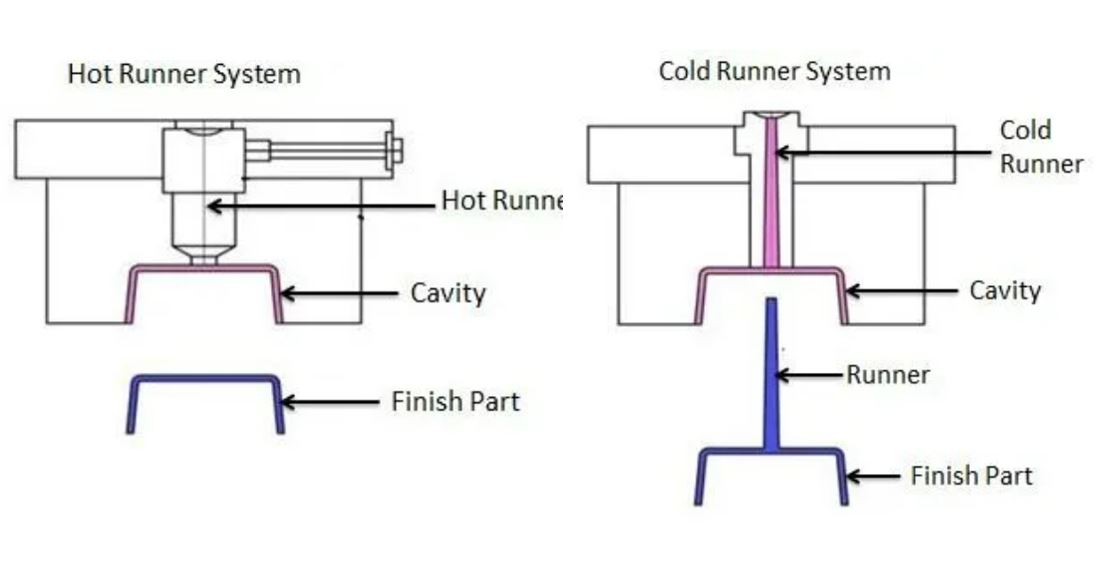
Runner systems form the backbone of every injection molding project. The decision between hot runner and cold runner technology shapes your tooling budget, production speed, scrap rates, and per-piece cost — often by tens of thousands of dollars across a mold's lifetime. Making the right call requires a clear picture of how each system performs under real production conditions. This guide breaks down the engineering, economics, and practical trade-offs of both approaches, drawing on 25+ years of injection molding and mold-making experience at Eastmaster. Whether you are planning a new tool or evaluating an existing program, the analysis below will help you select the runner configuration that delivers the best return for your specific application. For a deeper look at how mold costs are structured, you may also want to read our injection mold cost breakdown guide.
The Basics: What Are Hot and Cold Runner Systems?
Cold Runner Technology Explained
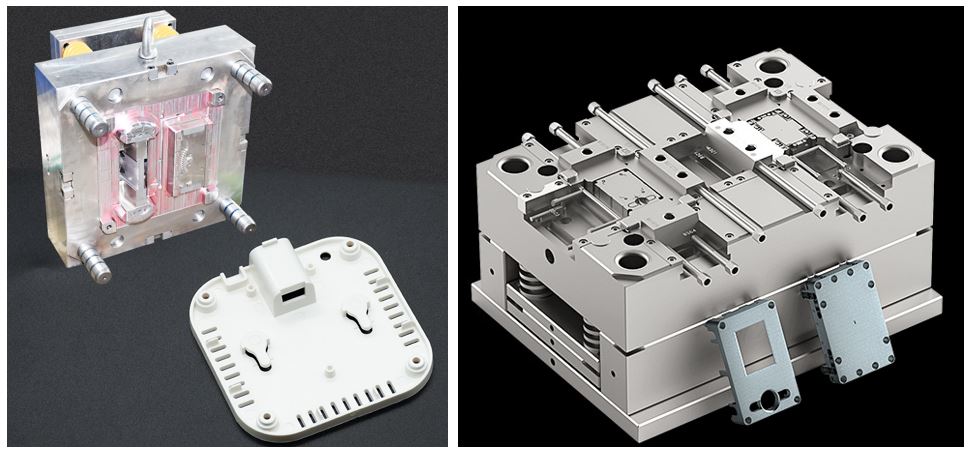
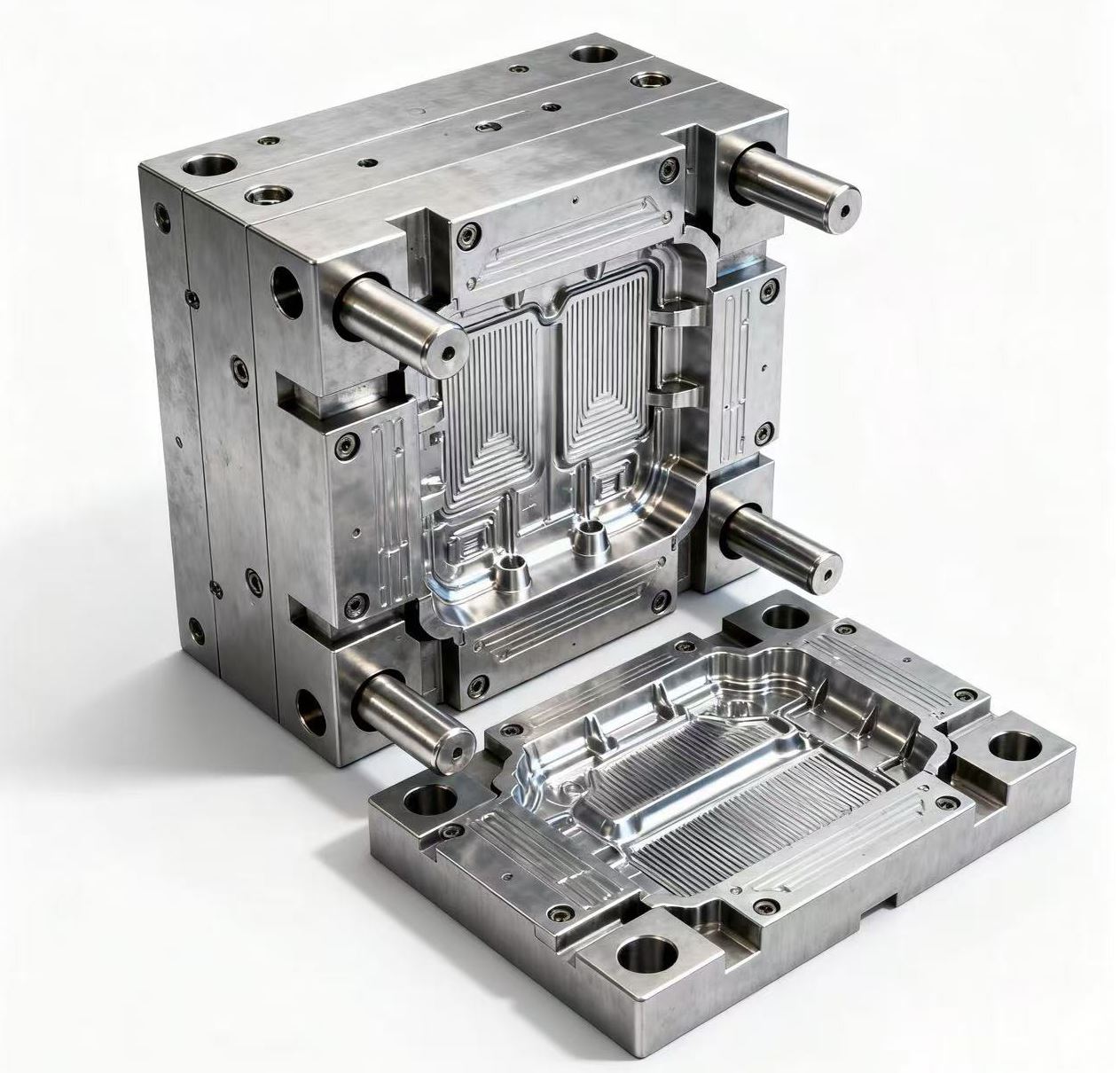
In a cold runner mold, molten plastic travels from the machine nozzle through a sprue, then branches into runner channels, and finally enters the part cavities through gates. After each injection cycle, the entire network — molded parts plus solidified runners — cools down and is ejected as one unit. The runners are then separated from the finished parts, either by hand or with automated trim tools, and the runner material is typically ground up and blended back into production. Cold runner molds come in two main configurations: • Two-plate molds — The simplest layout. A single parting line separates the mold halves. Runners and parts sit on the same plane and eject together. This design is straightforward, affordable, and widely used across industries. • Three-plate molds — An extra parting line lets the runner system drop away automatically during mold opening. This allows the use of pin-point gates for a cleaner cosmetic finish on parts, though the mold itself costs more to build.
Hot Runner Technology Explained
A hot runner mold adds heating elements and thermal insulation to the runner channels. The plastic inside those channels remains molten between shots — only the material inside the cavity cools and solidifies. When the mold opens, only the finished parts drop out. No runner waste. No regrind step. There are three principal hot runner architectures:
• Heated manifold systems — External heaters keep the entire manifold at processing temperature. This is the most common hot runner design and works well across a broad range of materials.
• Insulated runner systems — The runner channels are oversized so that a frozen plastic layer forms along the walls, acting as natural insulation. The molten core flows through the center without external heating. Lower equipment cost but less precise temperature control.
• Valve gate systems — A mechanical actuator opens and closes the gate with a precision pin. This eliminates gate vestige entirely, making it the go-to choice for cosmetic surfaces and optical components. It is also the most expensive option.
Side-by-Side Performance Comparison
The table below captures the key differences across all major factors that affect production economics and part quality:
|
Factor
|
Cold Runner
|
Hot Runner
|
|---|---|---|
|
Initial mold cost
|
Lower (baseline)
|
30–100% higher than cold runner equivalent
|
|
Mold complexity
|
Fewer components, simpler design
|
Requires manifold, heaters, thermocouples, and controllers
|
|
Cycle time
|
Longer — runner mass must cool before ejection
|
Shorter — only the part cools
|
|
Material waste
|
15–40% of total shot weight
|
Near zero (no runner solidifies)
|
|
Per-part cost
|
Higher — material waste plus regrind handling
|
Lower — no waste, faster cycles
|
|
Color change speed
|
Fast — simply remove old runner and restart
|
Slower — manifold must be purged (30–120 min vs 5–10 min)
|
|
Material compatibility
|
Any thermoplastic
|
Limited by thermal sensitivity of the material
|
|
Gate vestige
|
Visible gate mark on every part
|
Minimal; valve gate leaves zero mark
|
|
Maintenance burden
|
Low — no electronics to fail
|
Higher — heaters, sensors, and controllers need upkeep
|
|
Ideal production volume
|
Low to medium runs
|
Medium to high volume
|
The Economics: When Does Hot Runner Pay for Itself?
The hot runner premium is recovered through material savings and shorter cycle times. The math is straightforward — let's walk through a real-world example.
Sample Calculation
Consider a production scenario with these parameters:
• Part weight: 50 g
• Runner weight (cold runner setup): 15 g (30% of total shot)
• Material price: $3 per kg
• Annual production volume: 500,000 shots
• Hot runner system add-on cost: $8,000
Annual material savings with hot runner: 500,000 shots × 15 g saved per shot = 7,500 kg of plastic saved per year 7,500 kg × $3/kg = $22,500 saved annually Payback period: $8,000 ÷ $22,500 ≈ 4.3 months After that point, every shot produces pure cost savings. Over a typical 2-million-shot mold life, the hot runner option saves roughly $37,000 in material alone — not counting the additional savings from reduced cycle time.
Break-Even Formula
To estimate payback for your own project: Break-even shots = Hot runner premium ÷ (Runner weight in kg × Material cost per kg) Published industry ranges typically cite hot runner payback within 100,000 to 200,000 shots on production molds, with cycle-time savings sometimes shortening that window further. The exact crossover for your program depends on resin price, runner weight, and machine hourly rate — three variables a tooling partner should model before steel is cut. For a detailed look at total mold cost drivers, check our mold material selection guide.
Why Cold Runner Molds Still Make Sense
Despite the efficiency advantages of hot runners, cold runner systems remain the preferred choice in many situations:
• Lower upfront investment. A hot runner manifold adds $3,000 to $15,000+ to mold cost, depending on cavity count, brand (Yudo, Synventive, Mold-Masters, HRS, and others), and system complexity. For tight budgets or short-run tools, cold runners keep the barrier to entry low.
• Rapid color changes. Switching materials in a cold runner mold takes 5–10 minutes. The same job in a hot runner mold — where the manifold must be thoroughly purged — can consume 30 minutes to 2 hours. For operations running dozens of colors per week, this difference is significant.
• Broad material compatibility. Cold runners accept any thermoplastic without restriction. Heat-sensitive polymers like PVC or certain flame-retardant grades degrade when held at processing temperature inside a hot manifold for extended periods.
• Minimal maintenance risk. Without heaters, thermocouples, or temperature controllers, cold runner molds have fewer failure points. A heater malfunction in a hot runner mold halts production until the component is repaired or replaced.
• Prototype and bridge tooling. When the production timeline is uncertain or the design may change, the flexibility and low cost of cold runner molds make them the practical choice.
Why Hot Runners Dominate High-Volume Production
For programs with substantial annual volume, hot runner technology delivers measurable advantages across multiple dimensions:
• Eliminating waste at scale. A 20 g runner on a 50 g part represents 29% material waste per shot. Over 1 million cycles, that adds up to 20,000 kg of unnecessary plastic. Hot runners capture that savings on every single shot.
• Faster cycles. Cold runner molds must cool the runner mass before ejection. Removing that thermal load shortens cycle times by 15–30%, particularly on thick-walled parts where cooling time already dominates.
• Superior surface quality. Valve gate hot runners leave no gate mark. This is critical for consumer-facing parts, medical devices, and optical components where appearance matters.
• Automation-friendly. Hot runner molds eject only finished parts — no runner separation, no regrind handling, no material blending. Parts drop directly onto conveyors or into collection bins, enabling lights-out production.
• Consistent filling balance. Manifold designs distribute melt evenly across multiple cavities, reducing variation between cavities and improving overall part consistency.
Hybrid and Middle-Ground Solutions
The hot vs cold runner decision is not always an either-or proposition. Several hybrid strategies offer a balance:
• Hot runner mold with cold runner fallback. The mold is built with a hot runner system as the primary production mode, but includes removable runner plates that allow cold runner operation when needed. This provides flexibility for color changes or material trials.
• Thermally gated hot runners. A simplified alternative to valve gates. The gate tip freezes shut between shots without a mechanical pin. Less expensive than valve gate hardware, but leaves a small gate mark on the part.
• Insulated hot runners. No external heating required — the thick runner design maintains a molten core naturally. Lower equipment cost, though temperature control is less precise than with heated manifold systems.
Runner System Selection Checklist
Before finalizing your mold design, work through these questions with your tooling partner:
• What is the projected annual production volume?
• What is the material cost per kilogram?
• What percentage of total shot weight will the runner represent?
• How quickly will the hot runner premium be recovered?
• How frequently will color changes be required?
• Is the material thermally sensitive or heat-stable at processing temperatures?
• Does the part have cosmetic surface requirements that rule out visible gate marks?
• Is fully automated production (without runner handling) needed?
• Does the mold budget account for the hot runner premium?
• Does the chosen mold maker have proven experience with the selected runner type?
Partnering with Eastmaster for Your Runner System Decision
Eastmaster Manufacturing Limited brings deep expertise in both hot runner and cold runner injection mold design and production. Our engineering team works with all major hot runner brands — Yudo, Synventive, Mold-Masters, HRS, and Gunter — and supports every stage from initial analysis through mass production. Our capabilities include:
• Moldflow simulation to optimize gate location and runner layout
• Valve gate integration for zero-vestige cosmetic surfaces
• Multi-cavity mold design with balanced melt delivery
• Complete DFM review with runner system recommendation before any steel is cut
• CNC precision machining for tight-tolerance mold components
• ISO 9001 and ISO 13485 certified quality management
• D-U-N-S verified: 66-849-8033
Send your part design and annual volume requirements to our team. We will analyze your application and deliver a detailed runner system recommendation — complete with cost comparison — within 48 hours.

Email: info@eastmaster.com
Phone: +86 755 22676100
• WhatsApp / WeChat available on the right side.
ISO 2768 vs ISO 20457: General Tolerances in 2026