
Why Prototype Tools are often needed?
author: Eric Peng
2024-09-18

Prototype tools (molds), also known as rapid tools (molds), or soft tools (molds), are typically used before the production of formal production tools (molds). These molds help reduce the need for modifications to formal molds, quickly identify structural issues in the product design, and allow for component testing and validation. They also enhance the lifespan of formal molds. Prototype tools have low production costs, quick turnaround times, and short development cycles, significantly accelerating product upgrades and reducing the risks of new project investments.
Although other prototype manufacturing processes like 3D printing, CNC machining, or vacuum casting can often produce prototype parts faster and cheaper, the main advantage of rapid molds lies in their ability to produce commercial-grade parts with precise dimensions, using materials that match the design specifications. This allows clients to better understand whether the parts meet market demands and production standards, enabling them to test and confirm correct material choices.
Rapid molds can also be used to test production parameters. This enables engineers and designers to identify overlooked issues and implement redesigns or other measures to prevent defects in final parts.
Characteristics of Rapid Molds
Rapid molds are essentially injection molds designed to quickly and cost-effectively produce large volumes of parts. They are typically chosen when there is a 90% confidence in the success of a product development project.
Rapid molds are essentially injection molds designed to quickly and cost-effectively produce large volumes of parts. They are typically chosen when there is a 90% confidence in the success of a product development project.
Materials Used for Prototype tools
Simplified molds are usually made of materials such as aluminum alloy P20 or 45 steel. They are formed using processes like sand casting, forging, or machining from steel and aluminum plates or profiles via CNC machining. Auxiliary processes like wire cutting, electric discharge machining (EDM), and slow wire-feeding combine to quickly create a complete test mold. The final product is made using injection molding.
Simplified molds are usually made of materials such as aluminum alloy P20 or 45 steel. They are formed using processes like sand casting, forging, or machining from steel and aluminum plates or profiles via CNC machining. Auxiliary processes like wire cutting, electric discharge machining (EDM), and slow wire-feeding combine to quickly create a complete test mold. The final product is made using injection molding.
Prototype Tools Production Timeline
The production cycle for a prototype mold can be as short as three days to complete a trial mold. In slower cases, it typically takes about seven days to finish a simplified quick mold. For large products, such as car front bumpers, the production of a rapid mold can generally be completed within 30–40 days. For smaller products, like 3C items such as battery charger enclosures, rapid molds can be completed within seven days.
The production cycle for a prototype mold can be as short as three days to complete a trial mold. In slower cases, it typically takes about seven days to finish a simplified quick mold. For large products, such as car front bumpers, the production of a rapid mold can generally be completed within 30–40 days. For smaller products, like 3C items such as battery charger enclosures, rapid molds can be completed within seven days.
Techniques for Making Prototype Tools
To make prototype tools, processes are simplified based on the part design by minimizing the complexity of formal mold manufacturing methods, such as:
To make prototype tools, processes are simplified based on the part design by minimizing the complexity of formal mold manufacturing methods, such as:
Using Standard Mold Bases: Employing standard mold bases and only manufacturing inserts, reusing mold frames, or machining directly without inserts.
Reducing Automation: Replacing automatic ejectors, sliders, and inserts with manual removal processes or secondary machining methods.
Easier Machiining Materials: Using faster machining materials such as aluminum or soft steel.
Minimizing EDM: Reducing extra steps like EDM where possible.
Low-Cost Components: Opting for lower-cost components.
Reducing Automation: Replacing automatic ejectors, sliders, and inserts with manual removal processes or secondary machining methods.
Easier Machiining Materials: Using faster machining materials such as aluminum or soft steel.
Minimizing EDM: Reducing extra steps like EDM where possible.
Low-Cost Components: Opting for lower-cost components.
Since the production volume of prototype molds is typically not high, using simplified methods saves time and costs, ensuring the quick production of prototype molds.

A list of official holiday of China in 2025
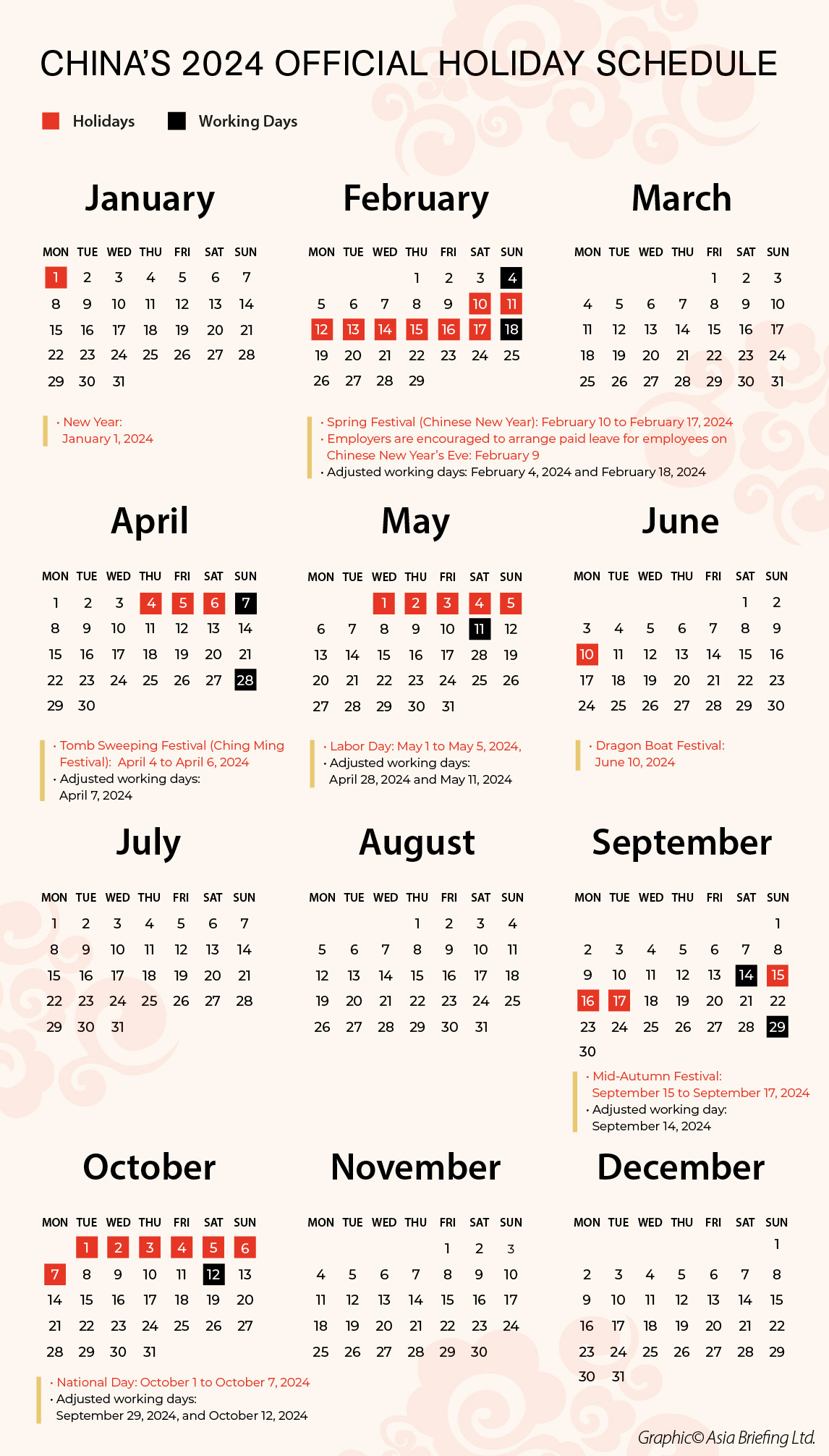
A list of official holiday of China in 2024
Related Article

China has released its 2026 public holiday schedule. In 2026. Just a notie to clients so they could arrange their plan to work with Chinese partners.
China has released its 2026 public holiday schedule. In 2026
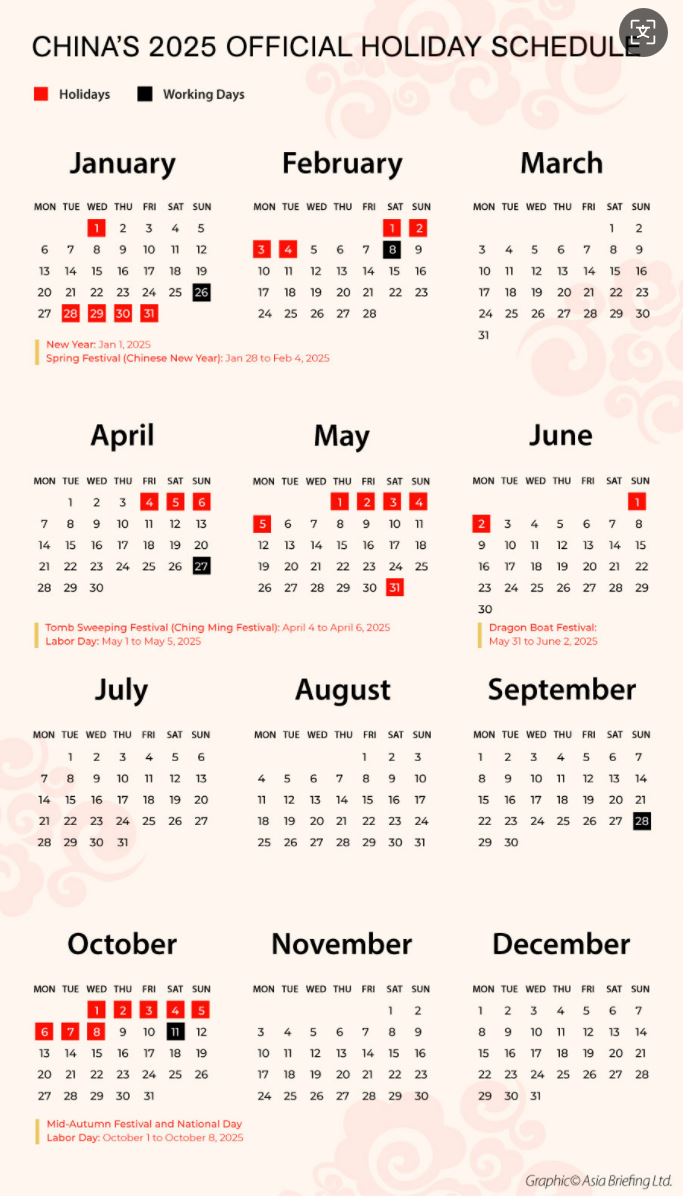
A list of official holiday of China in 2025
CNC machining, injection mold, plastic parts
CNC machining, injection mold, plastic parts
A list of official holiday of China in 2025

SEND MESSAGE