

Color-anodizing
Finish-1
Custom manufactured to client specifications only.
No inventory maintained.
All intellectual property and designs remain the exclusive property of the original client.
We never resell custom products to third parties.
No inventory maintained.
All intellectual property and designs remain the exclusive property of the original client.
We never resell custom products to third parties.
Aluminum Anodizing: Enhanced Durability with Precision CNC Machining
Our Aluminum anodizing services offer superior protection for aluminum CNC machined parts, increasing their resistance to corrosion, wear, and oxidation. As an integral part of the surface treatment process, anodizing (also called anodic coating) enhances the natural oxide layer on aluminum, providing a durable, scratch-resistant surface. This treatment is particularly useful for parts subjected to harsh environmental conditions, such as those in aerospace, automotive, and electronics industries.
Our Aluminum anodizing services offer superior protection for aluminum CNC machined parts, increasing their resistance to corrosion, wear, and oxidation. As an integral part of the surface treatment process, anodizing (also called anodic coating) enhances the natural oxide layer on aluminum, providing a durable, scratch-resistant surface. This treatment is particularly useful for parts subjected to harsh environmental conditions, such as those in aerospace, automotive, and electronics industries.
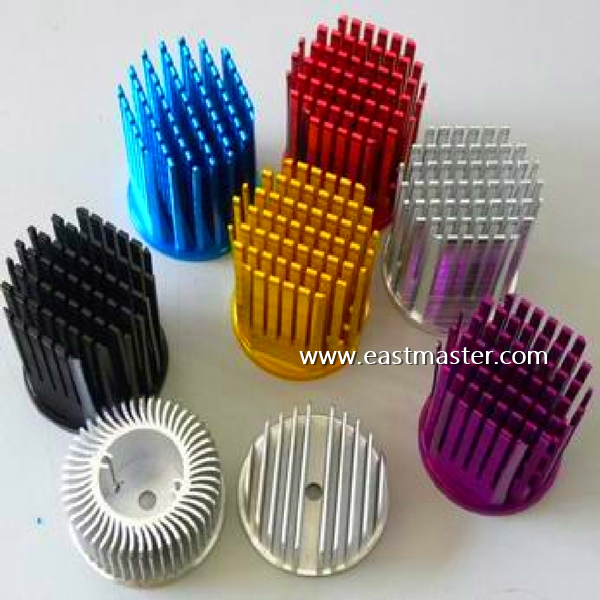
When combined with CNC machining, Aluminum anodizing ensures that your aluminum CNC machined parts are not only precise but also offer enhanced durability and performance. The anodic coating process ensures that the aluminum retains its appearance and functionality, with the added benefit of corrosion resistance. Whether you're looking to improve the appearance of your parts or ensure they last longer in demanding conditions, our anodic coating services provide the perfect solution.
FAQ
Q1: How does aluminum anodizing work?
A1: Aluminum anodizing is an electrochemical process that thickens the natural oxide layer on aluminum CNC machined parts. This creates a durable and corrosion-resistant surface, ideal for parts used in harsh environments.
Q1: How does aluminum anodizing work?
A1: Aluminum anodizing is an electrochemical process that thickens the natural oxide layer on aluminum CNC machined parts. This creates a durable and corrosion-resistant surface, ideal for parts used in harsh environments.
Q2: What is the difference between aluminum anodizing and anodic coating?
A2: Aluminum anodizing involves the formation of a thicker oxide layer on aluminum CNC machined parts to increase wear resistance. Anodic coating refers specifically to the process of anodizing, where the surface treatment creates an even, protective coating on the aluminum CNC machined parts.
A2: Aluminum anodizing involves the formation of a thicker oxide layer on aluminum CNC machined parts to increase wear resistance. Anodic coating refers specifically to the process of anodizing, where the surface treatment creates an even, protective coating on the aluminum CNC machined parts.
Q3: Can CNC machining be done before or after aluminum anodizing?
A3: Yes, CNC machining can be done both before and after aluminum anodizing (anodic coating). However, it’s typically best to perform CNC machining first to ensure that the part is precisely shaped before the anodizing process enhances its surface properties.
A3: Yes, CNC machining can be done both before and after aluminum anodizing (anodic coating). However, it’s typically best to perform CNC machining first to ensure that the part is precisely shaped before the anodizing process enhances its surface properties.
Q4: Why should I choose aluminum anodizing over other surface treatments?
A4: Aluminum anodizing (anodic coating) is ideal for aluminum CNC machined parts that require a durable, long-lasting surface finish. It offers excellent corrosion resistance, aesthetic appeal, and improved wear resistance compared to many other surface treatments, making it perfect for high-performance applications.
A4: Aluminum anodizing (anodic coating) is ideal for aluminum CNC machined parts that require a durable, long-lasting surface finish. It offers excellent corrosion resistance, aesthetic appeal, and improved wear resistance compared to many other surface treatments, making it perfect for high-performance applications.
Q5: Does anodic coating affect the conductivity of aluminum CNC machined parts?
A5: Yes, anodic coating can affect the electrical conductivity of aluminum CNC machined part by forming a thicker oxide layer. However, this layer is non-conductive, making anodized aluminum suitable for insulation in certain applications. If conductivity is essential, the coating can be tailored to retain the required properties.
A5: Yes, anodic coating can affect the electrical conductivity of aluminum CNC machined part by forming a thicker oxide layer. However, this layer is non-conductive, making anodized aluminum suitable for insulation in certain applications. If conductivity is essential, the coating can be tailored to retain the required properties.
Email: info@eastmaster.com
Phone:+86 755 22676100
WhatsApp / WeChat available on the right side.A6: Is the anodizing done after CNC machined parts? Q6: Yes it is done after CNC machined parts.

A7: How to find a good supplier of CNC machined parts?
Q7: You could trust Eastmaster for CNC machined parts.
Recommend Products


